Basement Water Removal in Brockton
A wet lower level can place stairs, stored contents and equipment between the entrance and the water. Removal begins with safe access and source assessment, then follows the affected floor and wall assemblies beyond the visible pool.
(888) 480-6221Discuss the flooded lower level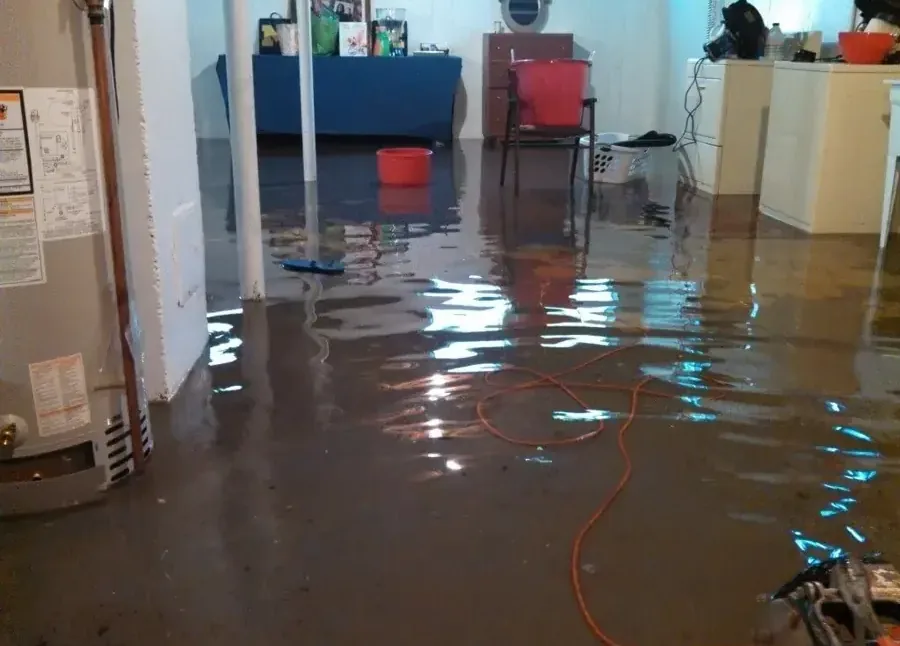
First steps for basement water removal in Brockton
- 1
Stay at a safe access point
Avoid descending into water when electrical equipment or footing is uncertain. A description from the stairway can begin assessment without exposing occupants to the room.
- 2
Identify continuing entry
Mention visible flow from a pipe, drain or opening and whether water appears to rise. Recovery planning must account for continuing entry before equipment is selected.
- 3
Describe storage and fixed equipment
Describe obstructions, soaked boxes and fixed equipment. These details help organize contents handling without first carrying wet belongings through unaffected parts of the property.
- 4
Record finished room involvement
Mention carpet, wall coverings and adjoining finished spaces reached by water. Those assemblies need inspection after open floor recovery, even if the visible pool seems limited to the unfinished section.
How basement water removal work is done in Brockton
From the top of a stairway, a basement puddle may look reachable even when the route is unsafe. Water near electrical equipment, uncertain footing and contaminated contents can all change the access decision. For a Montello property with an affected lower level, the first description should cover the entrance, visible depth and whether water is still arriving. Recovery methods can then be planned around the actual room and its condition.
What does basement water removal cost in Brockton, MA?
Basement water removal costs in Brockton depend on access, source condition, contents and the finishes affected below grade. A written scope should distinguish liquid recovery from cleaning, material removal and drying, with any source correction described separately.
Limited lower-level loss
$1,500 to $3,000
Finished basement wetting
$3,000 to $7,500
Complex lower-level flooding
$7,500 to $15,000+
Ranges are typical, not a quote: category of water, square footage, material class and how fast drying started move the number most. Run the water damage cost calculator for a closer range.
The basement water removal process in four steps
The drying plan follows the materials, water category and access conditions recorded during inspection. Technicians compare repeat measurements with an unaffected reference and adjust equipment when moisture stops falling.
Step 1 Assess the lower level entrance
The entrance assessment identifies stairway hazards and affected equipment. Recovery access begins only after necessary safety decisions and qualified evaluations are complete.
Step 2 Recover according to water condition
The observed source and room layout determine equipment and handling needs. Contents documentation preserves the position and condition of items before controlled movement or removal.
Step 3 Inspect the exposed room edges
After liquid recovery, checks extend to wall bases, flooring layers and storage footprints so retained materials receive attention beyond the open surface that originally held standing water.
Step 4 Document the remaining recovery work
The handoff identifies cleaned surfaces and final moisture observations. It also separates completed recovery from any remaining source correction or replacement of damaged finishes.
Understand the source before choosing the sequence
A lower level can receive a supply release, drain backup or outside entry. Each source changes handling and the materials considered for retention. The Salisbury Plain River is part of the city's landscape; the inspection at an individual property follows the observed entry and interior water path. The assessment should record that path before recovery removes the visible evidence.
At a Campello property, stored items and fixed equipment may divide the floor into separate access areas. Occupants should avoid moving wet contents through dry living spaces before their condition is assessed. Photographs from safe footing can preserve where belongings stood and which surfaces were submerged.
Reach edges hidden by finishes and storage
Removing open floor water exposes the next inspection points. Finished wall bases, flooring layers and spaces beneath stored contents can remain wet after a pumping or extraction pass. Each should be included in the material assessment.
- Identify any finished room connected to the wet area.
- Record wall coverings that contact the lower floor.
- Inspect accessible edges beneath movable stored belongings.
- Keep equipment service access separate from cleanup storage.
Turn removal into a documented recovery
In Cary Hill, the work plan should describe the entrance and removal route for the actual lower level. Water extraction may be followed by cleaning, selective material removal and drying, depending on the source and contact condition. The scope should explain that sequence clearly.
Retained surfaces need moisture checks before a finished room is put back together. Final notes should distinguish the recovered water from material drying and any work still needed to address recurring entry. That gives the owner a usable account of what has been accomplished below the main living space.
Basement water removal across Brockton and nearby towns
Lower level water recovery serves Brockton properties in Montello, Campello and Cary Hill where a basement is affected. Entrance details, equipment locations and adjoining finished rooms help shape a safe and practical assessment.
The same service nearby: basement water removal in Stoughton, Easton, Braintree.
Related water damage services in Brockton
Basement Water Removal questions in Brockton, MA
Still dealing with it?
Water below the main living space needs an access plan as well as a removal method. Describe the stairway and visible equipment before entry.
(888) 480-6221Discuss the lower level conditions01Is a shallow flooded basement safe to enter?
Shallow standing water requires a safety assessment before entry. Electrical equipment, contamination and footing need assessment before occupants enter, particularly when the only approach is a stairway ending near standing water.
02Does every basement loss involve outside water?
The source must be identified at the property. A supply release, drainage backup and outside entry have different handling needs, even when each leaves water on the same lower level floor.
03Should stored boxes be carried upstairs?
Their condition should be documented and handling assessed first. Wet or contaminated contents can spread damage into dry living spaces if moved before a controlled route and placement area are established.
04Why inspect finished walls after pumping?
Water can remain in wall bases and concealed floor layers after the open pool is gone. Material checks help determine whether access, removal or directed drying is needed before the room is restored.
05Can equipment rooms need separate access?
Fixed appliances and controls can affect both safety and recovery routes. The plan should preserve appropriate service access and coordinate any equipment evaluation before cleanup work approaches affected components.
06What comes after lower level water removal?
Depending on the source, recovery may continue with cleaning, selective removal and retained material drying. Final notes should distinguish those stages from source correction and the replacement of damaged finishes.
Plan recovery from the entrance to the wet floor
The source, stored contents and finished surfaces help determine how standing water can be recovered and which concealed edges need assessment afterward.