Appliance Leak Water Damage in Stoughton, MA
A washer, dishwasher or refrigerator leak can wet the floor beneath fixed cabinets before water appears in the room. The drying team checks those hidden edges and documents extraction, access and material drying.
(888) 480-6221Assess water beneath appliances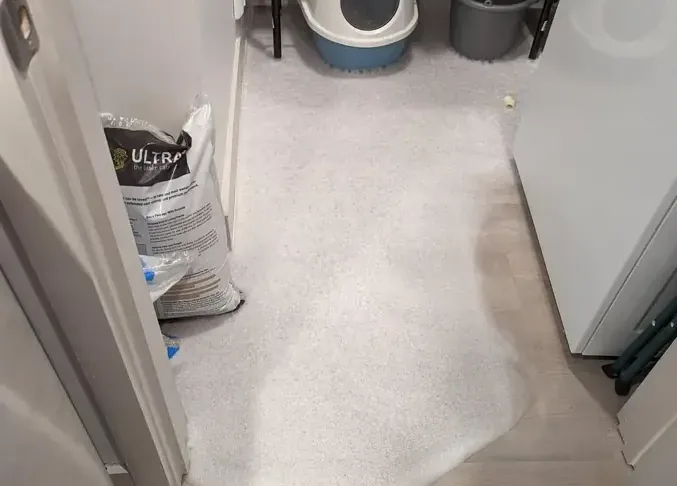
First steps for appliance leak water damage in Stoughton
- 1
Stop appliance use
Do not run another cycle to test the leak. A safe supply shutoff may limit water, while electrical isolation requires avoiding wet plugs and standing water.
- 2
Leave heavy equipment alone
Moving a machine can strain hoses or expose wet electrical parts. Safe access should be established before the appliance is shifted for inspection.
- 3
Keep the wet route visible
Photograph water at cabinet edges and thresholds from a dry position. Avoid covering damp finishes with rugs or stored contents before the assessment.
- 4
Describe the last operation
Explain whether the appliance was filling, washing, draining or idle when water appeared. Those observations help the source professional and restoration assessor investigate.
How appliance leak water damage work is done in Stoughton
An appliance leak can involve a supply hose, internal component or discharge path. The source assessment determines whether sanitary supply water or used appliance water contacted the room. Restoration technicians trace the damage around and beneath the equipment, while the appropriate appliance or plumbing professional addresses the failure. Unplugging or moving a wet machine without safe access can create another hazard.
What does appliance leak water damage cost in Stoughton, MA?
Appliance leak mitigation commonly ranges from $900 to $4,500. Cabinet access, floor layers, discharge contamination and the period before discovery change the scope; appliance service and replacement are separate from the drying work.
Accessible small leak
$900 to $1,800
Cabinet and floor spread
$1,800 to $4,500
Several concealed areas
$4,500 to $8,000+
Ranges are typical, not a quote: category of water, square footage, material class and how fast drying started move the number most. Run the Stoughton water damage cost calculator for a closer range.
The appliance leak water damage process in four steps
The drying plan follows the materials, water category and access conditions recorded during inspection. Technicians compare repeat measurements with an unaffected reference and adjust equipment when moisture stops falling.
Step 1 Identify water and access
The assessor records appliance operation, source observations and safe access conditions before checking the moisture route beneath equipment and surrounding fixed cabinetry.
Step 2 Recover the accessible loss
Extraction removes standing water while the crew evaluates absorbent finishes and coordinates any appliance movement needed to reach the hidden wet area.
Step 3 Dry the exposed assembly
Airflow and dehumidification address retained construction, with selective access where cabinet bases or floor layers would otherwise prevent effective evaporation.
Step 4 Confirm hidden-area progress
Repeated measurements beneath the installation and at adjoining thresholds show whether the drying plan reached beyond the visible kitchen or laundry floor.
Cabinet bases can conceal the first wet area
Water may pool beneath a dishwasher or refrigerator before reaching an open floor. Toe kicks and finish edges limit visibility and evaporation. The crew checks the adjoining cabinet base, the wall behind the appliance and any floor transition leading out of the room. A dry kitchen walkway does not settle the condition underneath built-in equipment.
- Measure at appliance edges and nearby cabinet bases.
- Inspect floor seams and thresholds for concealed migration.
- Record swollen panels and loose finish layers before removal.
- Coordinate safe access around hoses, wiring and heavy equipment.
Inspect the installation actually present
A kitchen on Grove Street may have a different floor assembly from a laundry room on School Street or Plain Street. A street name cannot identify the age of those appliance connections or the construction under them. The assessment records the actual installation, water source and affected layers rather than treating every local home as the same layout.
EPA WaterSense discusses household water use and leak awareness. The Department of Energy provides general appliance information. The restoration scope stays focused on water damage found around the equipment.
Drying behind the visible cabinet face
Extraction removes water that equipment can reach. Restricted areas may need selective access to expose wet layers, and damaged absorbent cabinet material may not be suitable to retain. The drying team manages airflow and humidity around the remaining construction and takes repeat readings under the same conditions. A cabinet face returning to normal color is not a moisture measurement.
- Keep appliance source findings with initial damage photographs.
- List access work and unsuitable-material removal in the scope.
- Record daily readings beneath and beside the equipment.
- Ask the insurer how source and resulting damage are treated.
The appliance service record and the drying record answer different questions. Both can help explain why the work was necessary without promising insurance coverage.
Appliance leak water damage across Stoughton and nearby communities
The restoration team serves ZIP 02072, including Pleasant Street, Lincoln Street, Union Street and the surrounding town. Crews assess the actual water source and wet materials at each property before choosing extraction and drying equipment.
Nearby coverage reaches Brockton, Easton, Braintree, Mansfield, Westwood.
Related water damage services in Stoughton
Appliance Leak Water Damage questions in Stoughton, MA
Still dealing with it?
Water beneath an appliance can remain hidden under the cabinets. Describe the equipment and the first visible wet edge.
(888) 480-6221Discuss the appliance water path01Can a refrigerator leak damage the next room?
Water may travel beneath flooring or through a partition base before becoming visible. The moisture map should include nearby transitions rather than only the space directly below the appliance.
02Is dishwasher water clean supply water?
That depends on where the failure occurred and what water escaped. Used wash or discharge water requires a different assessment from a sanitary supply connection.
03Must cabinets always come out?
No single rule fits every assembly. Material condition, contamination and drying access determine whether selective opening or removal is necessary. The assessor should explain the specific reason.
04Why leave equipment running after the floor looks dry?
Hidden layers can retain moisture longer than the visible finish. Material readings, not appearance, determine whether the retained assembly still needs controlled drying.
05Does cleanup include appliance servicing?
The water-damage scope addresses extraction, affected materials and drying. Appliance or plumbing work requires a separate professional and scope for the actual source failure.
06Can a laundry leak be assessed at night?
The response team provides 24/7 dispatch. Stop appliance use and report continuing water, affected electrical equipment and any damage visible in adjoining rooms or below.
Dry the installation area, not just the open floor
The mitigation crew checks beneath equipment and adjoining cabinet bases, then records the material readings that support completion.