Burst Pipe Water Damage in Stoughton, MA
A split supply pipe can wet several rooms before the valve closes. The extraction team follows that spread through thresholds and wall bases, then sets a drying plan around the actual materials affected.
(888) 480-6221Contain the pipe release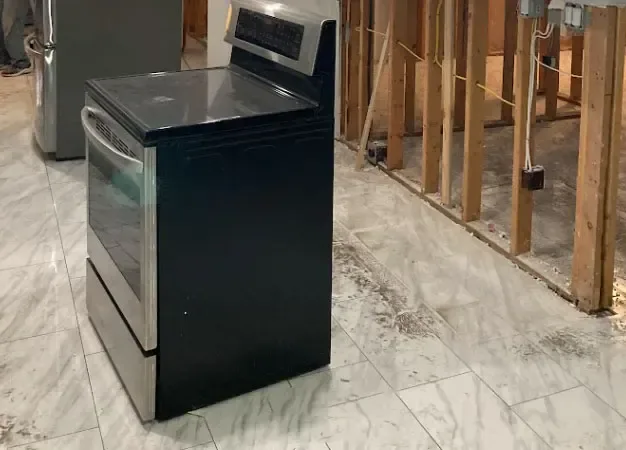
First steps for burst pipe water damage in Stoughton
- 1
Close an accessible supply
If a valve can be reached from a dry position, isolate the water. Do not cross a flooded room or approach wet electrical equipment to reach it.
- 2
Keep clear below damage
Water from an upper floor can weaken ceilings underneath. Occupants should stay out of rooms with sagging material, falling debris or affected lighting until assessed.
- 3
Save the initial view
Take photographs from safe ground before moving contents. A wide room view and a closer source view help show how the release spread through the space.
- 4
Describe the continuing flow
Tell the response team whether the supply is off, which levels are wet and where access is restricted. Those details shape the initial extraction assessment.
How burst pipe water damage work is done in Stoughton
A burst pipe creates two separate tasks: stopping the supply and dealing with water already inside the building. A plumber handles the failed component. Restoration crews recover standing water, map the route through the rooms and determine whether floor or wall layers obstruct drying. The assessment should include spaces below the release when water has passed through a ceiling or service opening.
What does burst pipe water damage cost in Stoughton, MA?
Burst-pipe extraction and drying commonly costs $1,500 to $7,500. A contained room is different from water crossing floors or levels; category, wet area, concealed materials and delayed source control determine the final mitigation scope.
Contained room release
$1,500 to $3,000
Several wet rooms
$3,000 to $7,500
Multiple-level spread
$7,500 to $12,000+
Ranges are typical, not a quote: category of water, square footage, material class and how fast drying started move the number most. Run the Stoughton water damage cost calculator for a closer range.
The burst pipe water damage process in four steps
The drying plan follows the materials, water category and access conditions recorded during inspection. Technicians compare repeat measurements with an unaffected reference and adjust equipment when moisture stops falling.
Step 1 Establish safe access
The assessor checks the shutoff status, electrical concerns and wet levels before defining a route for extraction equipment and documenting the affected rooms.
Step 2 Recover the release
The extraction crew removes standing water and identifies finishes that cannot remain, preserving photographs before selective removal changes the visible damage.
Step 3 Dry the wet assembly
Air movers and dehumidifiers support evaporation from floors and walls, with separate checks for cavities and rooms below the original release.
Step 4 Close the drying record
The team compares repeat readings with the chosen references and records the evidence supporting equipment removal, including any remaining material concerns.
Following a fast release beyond the nearest room
Water can cross a doorway beneath a finish even when the adjacent surface looks dry. Low wall materials and cabinet bases also absorb moisture from the floor. The crew checks those transitions before equipment placement. The condition of the source and the materials it contacted determine the water category; clear-looking water does not settle every contamination question.
- Map the wet edge before extraction changes its appearance.
- Check wall bases on both sides of room partitions.
- Inspect the floor below an upstairs release where access is safe.
- Protect dry contents and the equipment route from secondary wetting.
Separating public-main events from an indoor burst
The June 2023 public water-main break closed Pleasant Street between Lincoln Street and Union Street. An indoor supply failure is a different source and requires its own documentation. A property reached from Chestnut Street may need public-system information, private plumbing evaluation or both, depending on where the water actually came from.
The town Water Department addresses public water matters. For household preparation, Ready.gov explains emergency planning, while EPA WaterSense covers water-use and leak awareness. The restoration scope follows damage found inside the property rather than a presumed connection to a street incident.
What establishes that the burst-pipe loss is dry
The drying team pairs air movement with dehumidification after extraction. Wet drywall, wood and flooring do not release moisture at identical rates, so technicians record the materials separately. A persistent wet reading can indicate restricted evaporation or continuing source trouble. The crew adjusts access or equipment instead of removing machines simply because the surface looks better.
- Keep photos of the release area and affected contents.
- Record when the supply was isolated, if that time is known.
- Retain daily measurements and changes to the equipment plan.
- Separate plumbing source work from the documented drying charges.
Accurate timing matters to an insurer, but missing information should remain unknown rather than estimated as a fact. Coverage depends on the policy and cause.
Burst pipe water damage across Stoughton and nearby communities
The restoration team serves ZIP 02072, including Pleasant Street, Lincoln Street, Union Street and the surrounding town. Crews assess the actual water source and wet materials at each property before choosing extraction and drying equipment.
Nearby coverage reaches Brockton, Easton, Braintree, Mansfield, Westwood.
Related water damage services in Stoughton
Burst Pipe Water Damage questions in Stoughton, MA
Still dealing with it?
A stopped supply does not remove water already in the structure. Describe the wet rooms and any affected level below.
(888) 480-6221Discuss the pipe-loss rooms01Is a burst pipe the same as a frozen pipe?
No. A sudden pipe failure can have several causes. A freeze-related event needs its own source evaluation, including the possibility of other exposed sections leaking during thawing.
02Should water be restored after closing the main?
A plumber should assess the failed supply before water returns. Reopening it too soon can add another release to materials that have already absorbed water.
03Why inspect the next room?
Water can move beneath flooring and through wall bases without leaving a visible puddle in each room. Moisture mapping identifies the full path before the drying plan is limited too narrowly.
04Can ceiling material remain after an upstairs burst?
That depends on its condition, contamination and the ability to dry the layers above it. Sagging or softened material needs safe assessment before anyone occupies the space below.
05What should an insurance file include?
The useful record shows source observations, known timing, initial photos, wet-material measurements and the mitigation scope. The insurer evaluates those details against the policy rather than the restoration team promising payment.
06Who handles an active burst at night?
The response team provides 24/7 water-damage dispatch. Immediate electrical or structural danger requires emergency assistance first, and the initial call should identify any continuing flow or unsafe access.
After the valve closes, the drying assessment begins
Extraction addresses the standing release; material checks establish which floors, walls and cavities still hold moisture.