Commercial Water Damage in Stoughton, MA
Commercial water damage can affect stock, equipment and access as well as the structure. The restoration team maps those needs with the building contact, then organizes extraction and drying around safe, documented work areas.
(888) 480-6221Assess the business water loss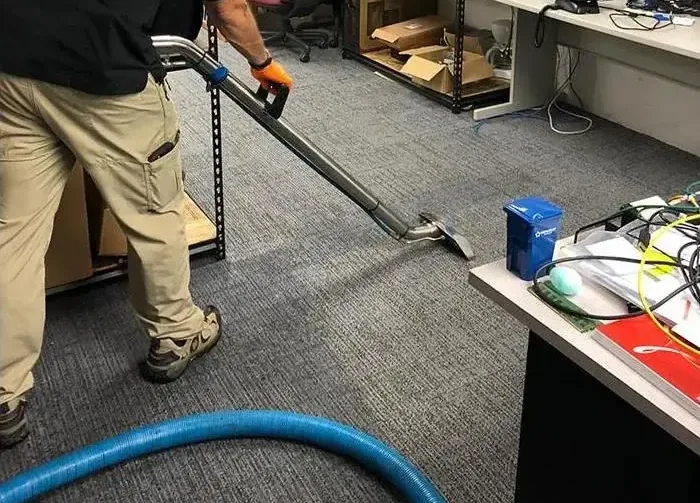
First steps for commercial water damage in Stoughton
- 1
Protect occupants first
Restrict entry to wet rooms and identify any affected electrical equipment, ceiling material or exit route. Immediate hazards take priority over keeping the business open.
- 2
Identify the building contact
Provide the person who can authorize access and explain occupancy restrictions. The response team needs a clear account of keys, shared spaces and utility controls.
- 3
Record affected operations
Note which rooms, stock and equipment are involved without moving unsafe items. Photographs and an accurate inventory help separate structural damage from contents concerns.
- 4
Explain the source status
Report whether water continues and which trade professional is addressing it. A drying plan needs to account for an unresolved source before work areas are reopened.
How commercial water damage work is done in Stoughton
A business water loss needs a clear account of the source, affected operations and who controls access to the building. The restoration assessor checks shared walls, service spaces and rooms below the release where relevant. Equipment placement must account for occupants, exits and sensitive contents. Continuing operations should never depend on an assumption that a wet area is safe simply because customers need access.
What does commercial water damage cost in Stoughton, MA?
Commercial water mitigation often ranges from $3,000 to $15,000, while large or complicated losses can exceed that range. Wet area, access hours, contamination, contents protection and the number of drying zones determine the scope.
Small business interior
$3,000 to $5,000
Several work areas
$5,000 to $15,000
Complex commercial loss
$15,000 to $30,000+
Ranges are typical, not a quote: category of water, square footage, material class and how fast drying started move the number most. Run the Stoughton water damage cost calculator for a closer range.
The commercial water damage process in four steps
The drying plan follows the materials, water category and access conditions recorded during inspection. Technicians compare repeat measurements with an unaffected reference and adjust equipment when moisture stops falling.
Step 1 Survey source and occupancy
The assessor maps affected construction and business access needs with the building contact, identifying hazards and shared spaces before recovery equipment enters.
Step 2 Organize water recovery
The extraction crew protects dry routes and coordinates around sensitive contents, while documenting materials that require removal or separate specialist evaluation.
Step 3 Run documented drying zones
Equipment and monitoring follow the actual moisture load in each zone, with changes recorded when occupancy restrictions or material response affect the plan.
Step 4 Verify each completed area
The drying record supports the material endpoint for each work area, while appropriate parties separately evaluate safe use and any remaining operational concerns.
Defining work areas around business needs
The crew separates affected construction from contents requiring another specialist or owner decision. Stock, records and powered equipment may need protection before recovery begins. Drying zones should reflect the actual water path and air conditions rather than departmental boundaries. A leak on one side of a partition can reach another occupied unit through floor or wall layers.
- Identify the authorized building contact and access restrictions.
- Document affected stock without assigning an unsupported value.
- Keep equipment routes and exits clear.
- Coordinate source control and utility concerns with the appropriate professionals.
Local commercial context without invented customers
The town has a manufacturing history and land used for retail, commercial and industrial activity. Pleasant Street, School Street and Union Street provide service-area context, not a claim that any named business is a customer. Each occupancy has its own construction, operating needs and equipment sensitivity. The inspection records those conditions before the work schedule is set.
OSHA offers workplace safety information, and Ready.gov business preparation addresses continuity planning. The restoration plan uses those broad principles alongside the hazards and moisture findings at the particular building.
Phased drying still requires measurable endpoints
A phased plan can separate work areas when the building layout and contamination allow it. Technicians record the moisture condition and equipment for each zone, then check whether air movement and dehumidification reach the wet assembly. Opening a space for use and ending structural drying are separate decisions that need evidence and an appropriate safety review.
- Preserve initial photographs and a room-by-room moisture map.
- Record equipment placement and any change to the drying zones.
- Keep daily readings organized by material and location.
- Separate building mitigation from contents and interruption claims.
Insurers may evaluate property damage and business interruption under different terms. Accurate records support that review without promising reimbursement or a reopening date.
Commercial water damage across Stoughton and nearby communities
The restoration team serves ZIP 02072, including Pleasant Street, Lincoln Street, Union Street and the surrounding town. Crews assess the actual water source and wet materials at each property before choosing extraction and drying equipment.
Nearby coverage reaches Brockton, Easton, Braintree, Mansfield, Westwood.
Related water damage services in Stoughton
Commercial Water Damage questions in Stoughton, MA
Still dealing with it?
A business loss needs both a moisture map and a safe access plan. Identify the building contact and affected work areas.
(888) 480-6221Discuss business drying access01Can a business stay open during drying?
That depends on hazards, contamination, exits and whether occupied areas can be safely separated. A phased plan still requires a safety decision for each operation.
02Who authorizes the work?
The property representative should identify the person with authority over access and the mitigation agreement. Tenants and owners may have different responsibilities that need clarification before work begins.
03Does the crew handle every damaged machine?
Specialized equipment may require its own service professional. The restoration assessment documents water exposure and coordinates access. A qualified equipment specialist evaluates affected machinery before the property contact returns it to use.
04Why inspect neighboring units?
Water can cross shared partitions and floor layers. The moisture boundary may extend beyond the room or unit where the release was first discovered.
05What supports an interruption claim?
Accurate dates, affected-area records and operational documentation can help the insurer review the loss. Coverage and payment remain subject to the policy and insurer decision.
06Is commercial dispatch available outside opening hours?
The response team provides 24/7 dispatch. Supply the building contact, access restrictions, source status and immediate hazards so the initial assessment can be planned.
Organize the commercial dry-out around documented conditions
The restoration team records wet construction, equipment zones and material progress while coordinating with the authorized property contact.