Basement Water Removal in Stoughton, MA
Water in a basement can involve plumbing, a drain or outside entry. The removal crew evaluates the source and access hazards before recovery, then checks the lower-level wall and floor materials for absorbed moisture.
(888) 480-6221Assess lower-level standing water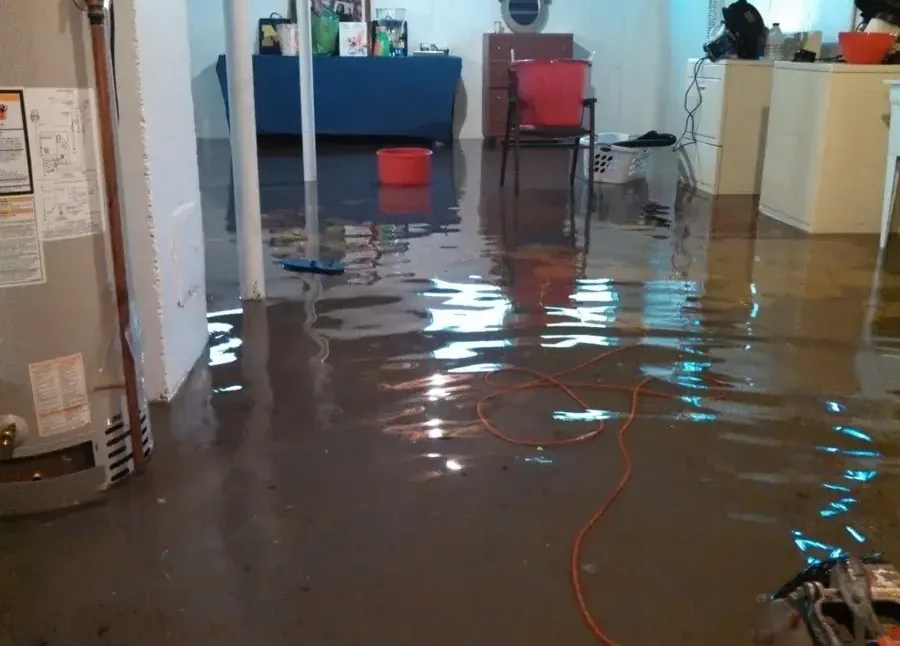
First steps for basement water removal in Stoughton
- 1
Remain outside standing water
Avoid entering a basement with unknown electrical or structural conditions. Do not descend through water to reach a breaker, appliance or pump control.
- 2
Describe continuing entry
From a safe position, note whether water is rising or a source remains active. The crew needs that information before selecting recovery methods.
- 3
Protect clean storage
Keep unaffected items and people away from the access route without carrying wet contents upstairs. Unknown contamination requires separation rather than ordinary household cleanup.
- 4
Request a source-based assessment
Explain whether the suspected source is plumbing, a drain or outside entry. The crew uses the source account, material contact and access conditions to select the removal method and contamination precautions.
How basement water removal work is done in Stoughton
A flooded lower level is not safe to enter simply because the stairs remain dry. Electrical equipment, water depth and the structure need assessment before recovery begins. The source may be a supply release, drain backup or outside water, each with different cleanup implications. The crew records those conditions and selects a removal method that fits the actual loss.
What does basement water removal cost in Stoughton, MA?
Basement water removal and drying commonly ranges from $1,500 to $7,500. Water depth, source category, safe access, stored contents and wet finish layers change the scope; extensive contamination or structural concerns can add substantial work.
Limited lower-level loss
$1,500 to $3,000
Finished basement wetting
$3,000 to $7,500
Complex lower-level flooding
$7,500 to $15,000+
Ranges are typical, not a quote: category of water, square footage, material class and how fast drying started move the number most. Run the Stoughton water damage cost calculator for a closer range.
The basement water removal process in four steps
The drying plan follows the materials, water category and access conditions recorded during inspection. Technicians compare repeat measurements with an unaffected reference and adjust equipment when moisture stops falling.
Step 1 Evaluate access and source
The assessor reviews electrical and structural concerns, water depth and continuing entry before defining a safe route and an appropriate recovery method.
Step 2 Recover under assessed conditions
The crew removes water using the selected approach and records contamination, affected contents and materials that cannot remain in the lower-level assembly.
Step 3 Expose the wet perimeter
Necessary access around storage, floor edges and wall bases allows cleaning and controlled drying of retained construction beyond the original standing-water area.
Step 4 Measure the retained structure
Repeat readings compare lower-level materials with suitable references and identify persistent wetting before equipment removal closes the drying phase.
Water removal follows the source assessment
Deeper water, active outside pressure and contaminated entry require different decisions from a shallow sanitary supply spill. The team evaluates whether pumping is appropriate and how recovered water can be handled. Occupants should not improvise rapid removal where structural conditions are uncertain. A basement sump or drain also needs its own source and operating assessment.
- Keep people away from submerged electrical equipment.
- Identify whether water continues entering the lower level.
- Record the source and depth from a safe observation point.
- Separate contaminated contents from unaffected stored belongings.
Lower-level entry checks near local water features
Around Ames Long Pond and Muddy Pond, indoor water removal begins with a direct assessment of the affected property and the water entry route. A basement on Plain Street or Prospect Street still needs its own entry assessment. The crew checks whether the property has a finished lower level and identifies the entry route before selecting recovery equipment.
Ready.gov flood information covers avoidance of unsafe water. FEMA provides official flood information and recovery material. Property-specific conditions, rather than a nearby landmark, determine the safe removal and cleanup plan.
Drying the lower-level assembly after recovery
Concrete, floor finishes and wall bases may hold moisture after standing water is gone. Stored contents can restrict access and trap dampness against walls. The crew checks concealed edges, removes unsuitable material where needed and establishes airflow with humidity control. Repeat readings show whether the retained construction is drying or whether another source remains active.
- Photograph water marks and affected storage before cleanup.
- Record material removal, recovery methods and equipment placement.
- Monitor wall bases and floor transitions through the dry-out.
- Keep insurer questions tied to the actual water source and policy.
After pumping, the crew checks moisture in surrounding wall bases and beneath accessible lower-level finishes. Material readings guide equipment placement and the decision to continue or finish drying.
Basement water removal across Stoughton and nearby communities
The restoration team serves ZIP 02072, including Pleasant Street, Lincoln Street, Union Street and the surrounding town. Crews assess the actual water source and wet materials at each property before choosing extraction and drying equipment.
Nearby coverage reaches Brockton, Easton, Braintree, Mansfield, Westwood.
Related water damage services in Stoughton
Basement Water Removal questions in Stoughton, MA
Still dealing with it?
A lower-level loss needs safe entry and an identified source. Describe standing depth and continuing water without entering the flooded room.
(888) 480-6221Discuss basement access hazards01Can a homeowner enter to unplug a wet appliance?
Standing water near electrical equipment is unsafe to approach. Occupants should remain outside the affected area and obtain appropriate emergency or electrical assistance before entry.
02Does every basement flood require the same pumping method?
No. Depth, source, contamination and structural conditions affect removal decisions. The assessment must establish a safe approach rather than relying on a fixed pumping routine.
03Is groundwater always the cause?
A supply leak or sewer backup can also wet a lower level. The location below grade does not identify the actual water source or the applicable cleanup category.
04Can stored cardboard remain after getting wet?
Material condition and contamination determine what can remain. Absorbent contents may obstruct cleanup and drying, so the assessor should explain the separation and disposal decisions.
05Why measure concrete after pumping?
Concrete and finishes can retain absorbed moisture after free water disappears. Repeat material checks determine whether drying equipment has reached the affected assembly.
06Can a lower-level loss receive help at any hour?
The response team provides 24/7 dispatch. Describe water depth, continuing entry and access hazards from safe ground; immediate danger requires emergency assistance first.
Remove basement water with the source and structure in view
The recovery plan addresses safe access, cleanup category and the wet lower-level assembly, with measurements documenting the retained materials.