Storm Flood Cleanup in Stoughton, MA
Stormwater entering a building carries different concerns from a clean supply leak. The cleanup crew assesses contamination, removes affected porous materials and dries the remaining structure with controlled access and a documented scope.
(888) 480-6221Assess outside water entry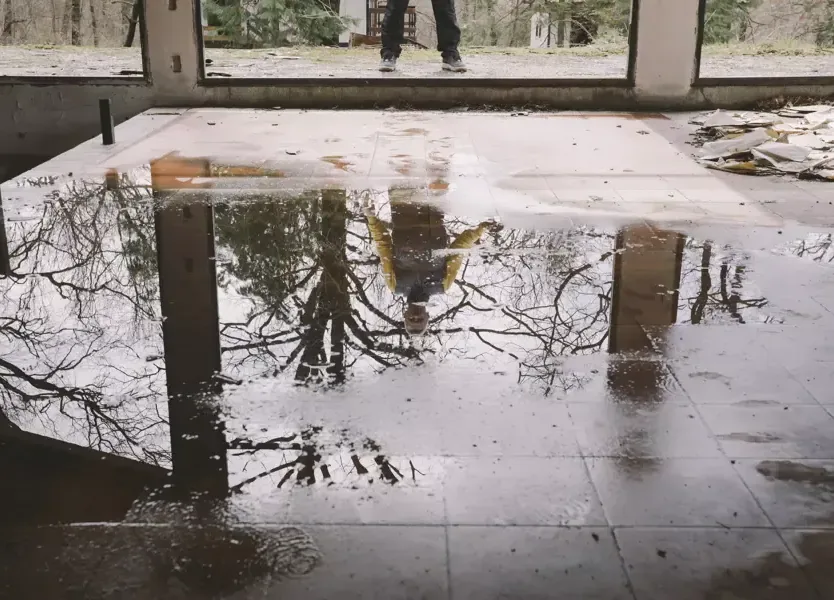
First steps for storm flood cleanup in Stoughton
- 1
Avoid floodwater entry
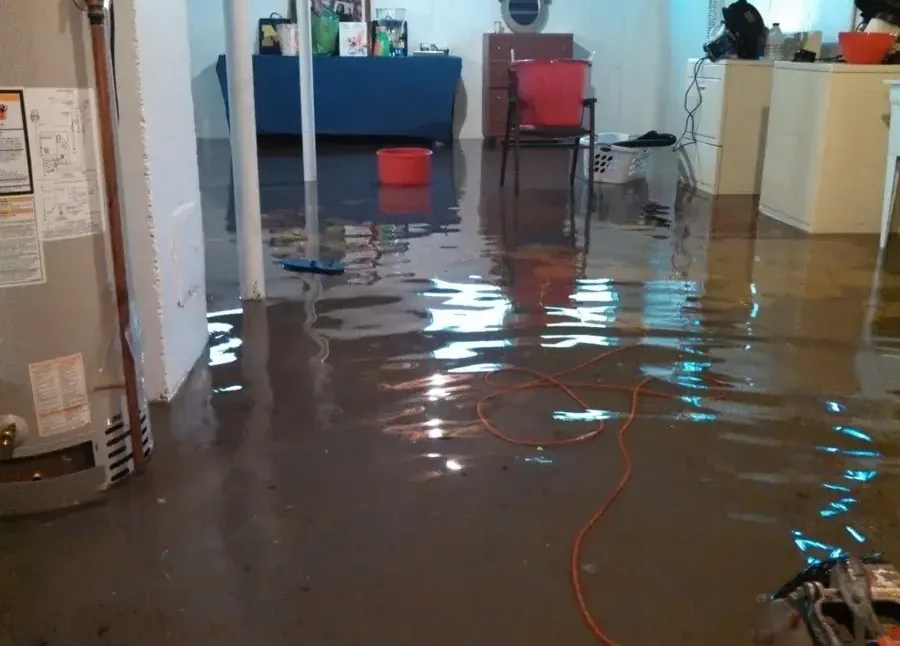
No one should walk through unknown standing water to inspect a room or reach equipment. Electrical, structural and contamination hazards require assessment first.
- 2
Keep clean areas separate
Close off access where practical without entering the wet space. Prevent children, pets and footwear from carrying flood residue into unaffected rooms.
- 3
Photograph from safe ground
Record visible entry, water marks and affected belongings only when safe. Those images preserve conditions that water recovery and removal later change.
- 4
Report the source accurately
Describe outside entry, any continuing flow and affected levels. Do not label a supply break as stormwater unless the actual source supports that description.
How storm flood cleanup work is done in Stoughton
Outside floodwater may carry soil, waste and other contaminants into a room. The cleanup plan starts with safe access, electrical conditions and the route by which water entered. Crews establish separation from unaffected areas before recovery and removal. Drying dirty porous materials in place is not equivalent to cleaning a sanitary supply release.
What does storm flood cleanup cost in Stoughton, MA?
Storm flood cleanup often ranges from $3,000 to $10,000, with extensive contaminated losses costing more. Water depth, porous-material removal, disposal access and the remaining drying load drive the scope beyond simple pumping.
Limited outside entry
$3,000 to $5,000
Several contaminated rooms
$5,000 to $10,000
Extensive flood damage
$10,000 to $20,000+
Ranges are typical, not a quote: category of water, square footage, material class and how fast drying started move the number most. Run the Stoughton water damage cost calculator for a closer range.
The storm flood cleanup process in four steps
The drying plan follows the materials, water category and access conditions recorded during inspection. Technicians compare repeat measurements with an unaffected reference and adjust equipment when moisture stops falling.
Step 1 Assess safe entry
The response team evaluates electrical and structural concerns, identifies the water route and establishes separation between contaminated rooms and unaffected living space.
Step 2 Recover water and debris
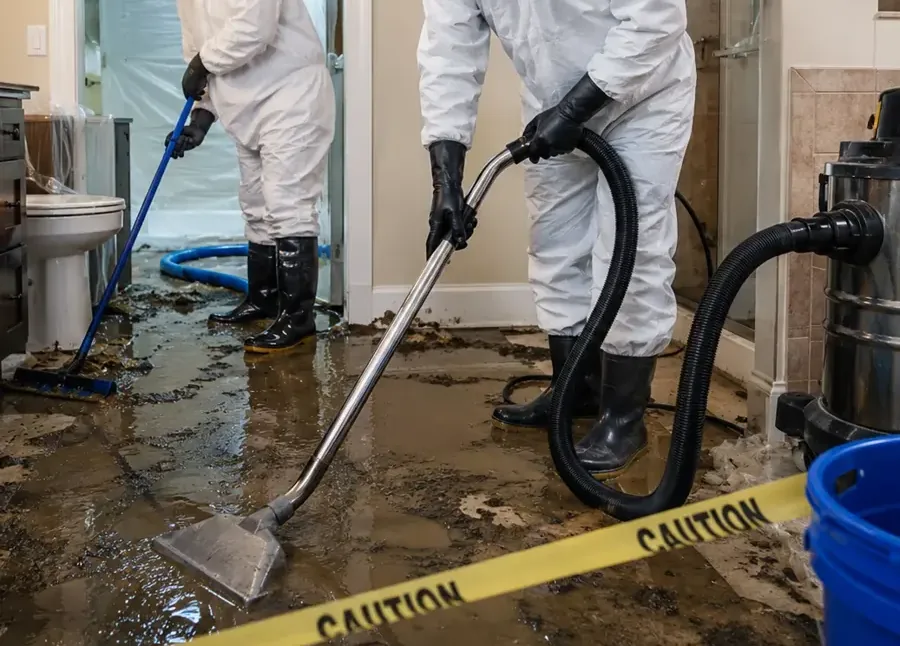
The cleanup crew removes standing water and unsuitable porous materials, using a controlled equipment and disposal route that limits secondary spread.
Step 3 Clean exposed surfaces
Accessible remaining construction receives cleaning suited to the contamination before airflow and dehumidification begin drying the retained structural materials.
Step 4 Document material recovery
Technicians track repeat readings and inspect concealed edges until the retained assembly reaches its drying goal, preserving the evidence for the loss record.
Removing water without spreading contamination
The crew chooses recovery equipment for depth and access, then handles affected contents and finishes according to their condition. Contaminated porous materials generally require removal. Remaining accessible surfaces need cleaning before drying equipment drives evaporation through the room. Equipment routes and disposal paths should avoid carrying debris into clean living areas.
- Keep occupants and pets away from affected rooms.
- Document water marks and debris before cleanup changes the scene.
- Separate wet porous materials from clean contents.
- Inspect concealed lower wall and floor layers reached by the water.
Assessing outside entry around local water features
Around Ames Long Pond and Muddy Pond, the property assessment documents the actual entry route, water level and rooms affected. A property on Pleasant Street still requires a direct account of outside entry. The documented public-main incident near Lincoln Street and Union Street is a distinct event and should not be described as storm flooding.
Ready.gov flood safety explains why people should avoid floodwater. FEMA provides official flood and disaster information. Property-specific mapping and the observed entry route matter more than assumptions based on a nearby pond or street.
Cleaning the assembly before measured drying
After water recovery and unsuitable-material removal, the crew cleans accessible surfaces using methods appropriate to the loss. The drying team then manages humidity and airflow through exposed construction. Repeated readings document the remaining moisture load and reveal cavities that need additional access. Material readings beneath accessible finishes guide the next drying adjustment and identify layers that still retain moisture.
- Preserve photos of the entry route and original water level.
- List disposal and cleaning separately from drying equipment.
- Keep daily material readings with the mitigation record.
- Ask the insurer about flood coverage and applicable policy terms.
Flood coverage can differ from ordinary indoor water-loss coverage. The insurer reviews the documented cause, cleanup scope and policy terms when deciding coverage and payment.
Storm flood cleanup across Stoughton and nearby communities
The restoration team serves ZIP 02072, including Pleasant Street, Lincoln Street, Union Street and the surrounding town. Crews assess the actual water source and wet materials at each property before choosing extraction and drying equipment.
Nearby coverage reaches Brockton, Easton, Braintree, Mansfield, Westwood.
Related water damage services in Stoughton
Storm Flood Cleanup questions in Stoughton, MA
Still dealing with it?
Outside water requires a contamination assessment before ordinary drying. Describe the entry route and affected levels from safe ground.
(888) 480-6221Discuss the flood entry route01Is outside floodwater treated like a pipe leak?
No. Outside water can carry contamination that changes protective measures and material decisions. The assessment considers the source and contact history before selecting cleanup methods.
02Can wet carpet be dried after a flood?
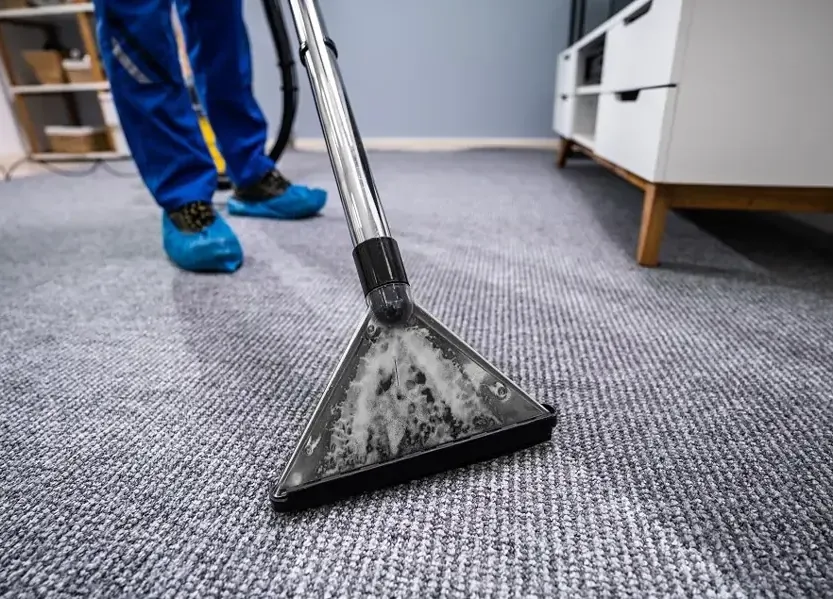
Contaminated porous carpet and pad generally require removal. Drying alone does not remove the contamination, so the crew should explain the material decision before equipment begins.
03Does a nearby pond mean flood insurance applies?
Coverage and mapping depend on the particular property and policy. A local water feature is insufficient to identify a parcel flood zone or a promise of insurance payment.
04Why are wall bases opened?
Floodwater can reach concealed porous layers and restrict drying behind finishes. Controlled removal exposes affected areas for cleaning and assessment when the materials cannot safely remain.
05What records should be kept?
Initial water marks, entry photos, contents records, removal details and drying measurements help explain the loss. The owner should check notification and documentation requirements with the insurer.
06Can storm cleanup be requested overnight?
The response team provides 24/7 dispatch, but unsafe floodwater and immediate electrical or structural danger require emergency assistance before a restoration crew enters.
Clean the flood-affected structure before drying it
The cleanup team separates recovery, material removal and cleaning from the measured drying of construction that can remain.