Roof Leak Water Damage in Stoughton, MA
Rain entering the roof can travel along sheathing and framing before reaching a ceiling. The restoration team documents interior wetting and dries accessible materials after the exterior entry receives appropriate source control.
(888) 480-6221Assess rain inside the roof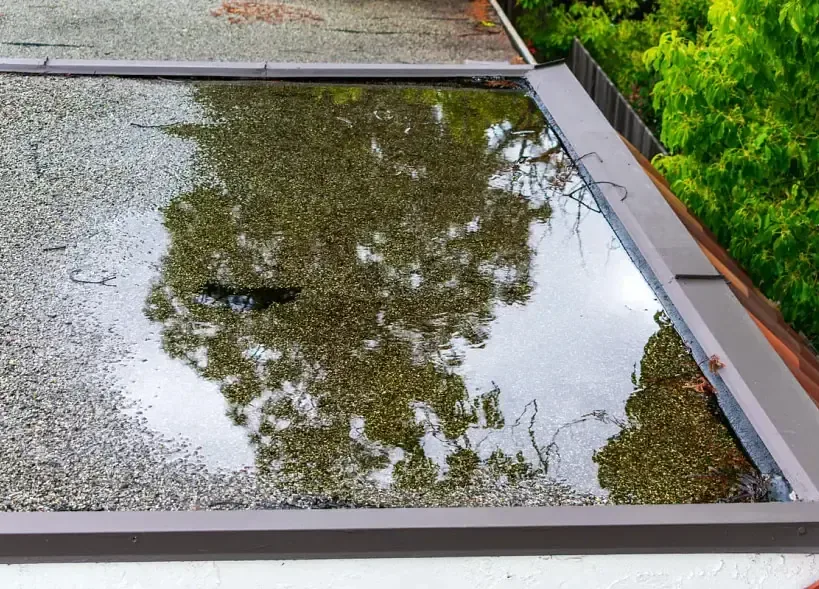
First steps for roof leak water damage in Stoughton
- 1
Stay off the roof
Occupants should avoid climbing onto wet roofing or entering an unsafe attic. Exterior source control requires appropriate access and the right trade professional.
- 2
Clear the ceiling hazard
Keep the room below sagging or softened material unoccupied. Wet lighting and ceiling movement should be described before anyone approaches the affected area.
- 3
Record the rain pattern
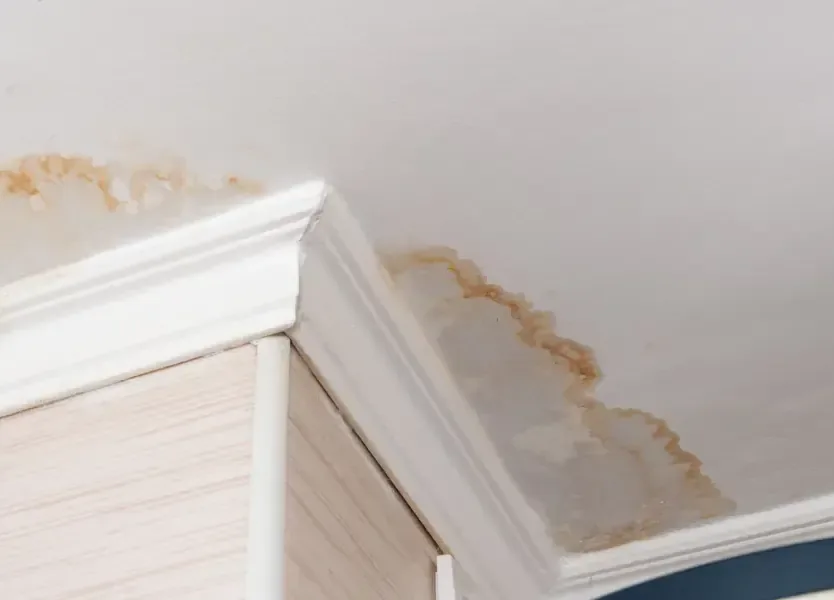
Note when dripping occurred and photograph the interior damage from a safe position. Do not invent an entry point based solely on where the stain appears.
- 4
Describe attic access
Tell the response team whether the attic is accessible and which rooms are wet. Safe inspection conditions determine the first interior assessment and equipment route.
How roof leak water damage work is done in Stoughton
Roof leakage needs an exterior source evaluation and an interior damage assessment. The restoration crew follows wetting through accessible attic materials, ceiling cavities and the room below. A roofing professional addresses the entry point. Drying the ceiling without controlling continued rain entry leaves the structure exposed to another wetting cycle and makes equipment progress difficult to interpret.
What does roof leak water damage cost in Stoughton, MA?
Roof leak interior cleanup commonly ranges from $1,000 to $6,000. Attic access, insulation removal, ceiling condition and the spread into occupied rooms affect the scope; exterior roofing work and replacement finishes require separate arrangements.
Localized interior entry
$1,000 to $2,500
Attic and room wetting
$2,500 to $6,000
Broad overhead loss
$6,000 to $10,000+
Ranges are typical, not a quote: category of water, square footage, material class and how fast drying started move the number most. Run the Stoughton water damage cost calculator for a closer range.
The roof leak water damage process in four steps
The drying plan follows the materials, water category and access conditions recorded during inspection. Technicians compare repeat measurements with an unaffected reference and adjust equipment when moisture stops falling.
Step 1 Trace accessible wetting
The assessor compares attic observations with room-level stains and records the moisture route that can be established without unsafe roof or ceiling access.
Step 2 Coordinate entry control
Exterior source work and interior mitigation address different tasks, so the drying record identifies whether rain can still reach the affected assembly.
Step 3 Expose suitable drying surfaces
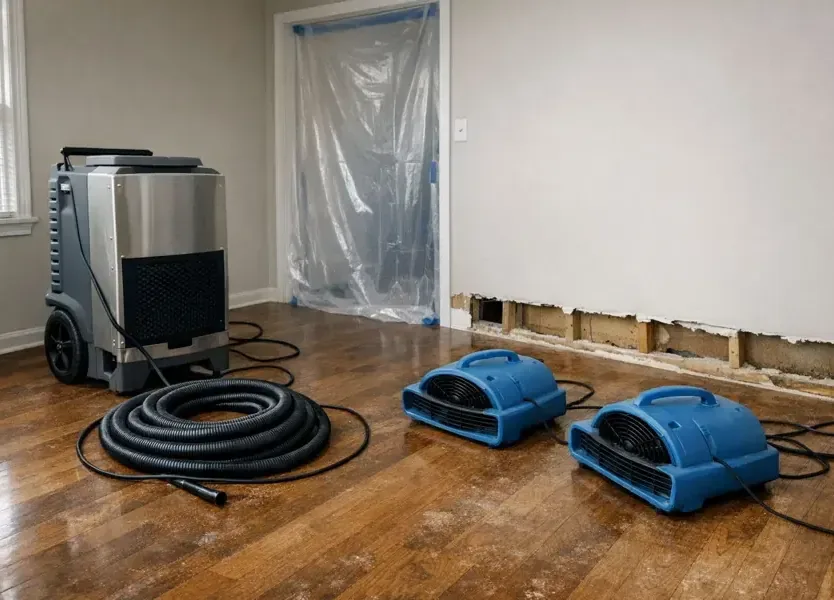
The crew removes unsuitable wet materials where needed and establishes airflow to accessible framing while dehumidification controls the moisture released indoors.
Step 4 Confirm the cavity endpoint
Repeat material measurements show whether the overhead assembly is drying, with final documentation supporting equipment removal after the established goal is reached.
Tracing water through attic framing and insulation
Water can run along roof framing before it drops onto insulation. The visible ceiling stain may therefore sit away from the exterior opening. Safe access matters: wet decking, hidden openings and electrical equipment make an improvised attic inspection risky. The assessor records the route that can be established and identifies spaces that need further access.
- Compare roof-side wetting with the stain visible in the room.
- Check insulation condition before treating the ceiling surface as the full loss.
- Record wet framing and sheathing at repeatable measurement points.
- Protect the occupied space from falling or unstable ceiling materials.
Winter context for local roof-water assessment
The town recorded substantial snow during the 2022 blizzard. For affected properties near Halloran Park, Ames Long Pond or School Street, the assessment traces active roof entry and records wet insulation, framing and ceiling finishes. A roof leak may involve rain entry, drainage or another defect that requires a separate exterior evaluation.
Ready.gov winter-weather information addresses preparation and safe decisions during severe conditions. The Department of Energy provides general information about home assemblies. The drying plan remains specific to materials found wet inside the building.
Drying the interior after weather entry stops
Water held in insulation or above a ceiling finish can remain after dripping ends. The crew determines which materials are unsuitable to retain and which can dry through controlled access. Airflow and dehumidification manage evaporation, with readings taken in the actual assembly rather than relying only on room humidity. Technicians investigate any area that stops improving.
- Keep exterior source findings with the initial interior photographs.
- Document material removal before the original stain disappears.
- Track framing and finish readings separately where appropriate.
- Ask the insurer how the cause and policy terms affect coverage.
A weather break creates an opportunity for safe exterior inspection. The source professional checks the entry point, and the drying crew verifies moisture in concealed materials before closing the work.
Roof leak water damage across Stoughton and nearby communities
The restoration team serves ZIP 02072, including Pleasant Street, Lincoln Street, Union Street and the surrounding town. Crews assess the actual water source and wet materials at each property before choosing extraction and drying equipment.
Nearby coverage reaches Brockton, Easton, Braintree, Mansfield, Westwood.
Related water damage services in Stoughton
Roof Leak Water Damage questions in Stoughton, MA
Still dealing with it?
A stopped drip can leave insulation and framing wet. Describe the affected rooms and any safe attic observations.
(888) 480-6221Discuss rain-entry damage01Does the ceiling stain mark the roof opening?
Not reliably. Water can travel along roof framing or other surfaces before reaching the room. The exterior source and interior moisture route both need assessment.
02Should wet insulation stay in place?
Its condition, contamination and effect on access determine that decision. The assessor should explain whether it can remain without preventing the surrounding assembly from drying.
03Can drying begin during continued rain?
Some protective and recovery work may be appropriate, but continuing entry must be identified. A drying record should not treat repeated wetting as normal progress toward completion.
04Is this service roof replacement?
The mitigation scope concerns interior water damage, material removal and drying. A roofing professional handles exterior source work under a separate scope and agreement.
05What local event proves the cause?
No town-wide weather event proves an individual roof defect. The recorded winter conditions provide context, while inspection must establish how water entered the particular building.
06Is help available when rain enters overnight?
The response team provides 24/7 dispatch for active water damage. Describe ceiling movement, electrical concerns and safe access; immediate danger needs emergency assistance first.
Trace the roof water before closing the ceiling
The restoration assessment connects interior stains with wet overhead materials and records drying after source control.