Structural Drying in Mansfield
Removing a puddle leaves a different question: how much moisture remains in the building? Mansfield structural drying uses material readings, suitable access and equipment adjustments to address retained water inside the affected assembly.
(888) 480-6221Discuss retained material moisture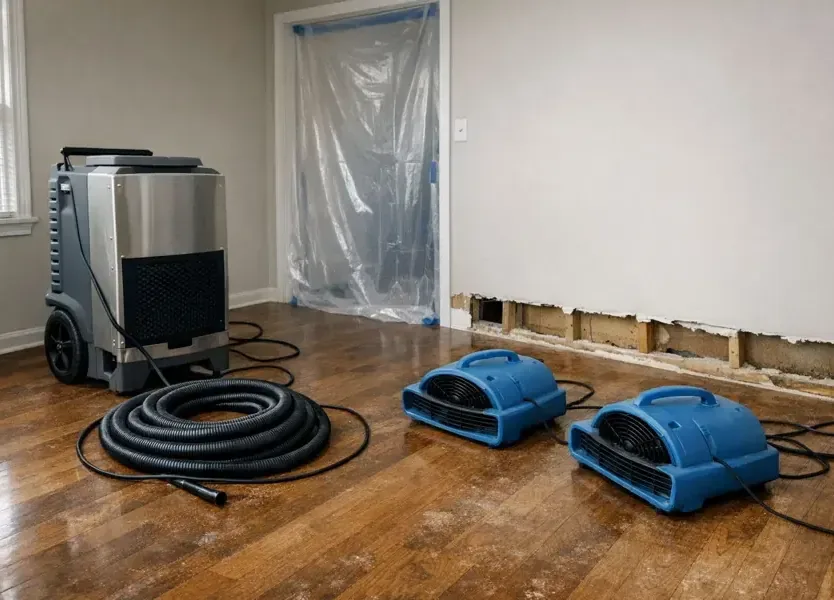
First steps for structural drying and dehumidification in Mansfield
- 1
Provide the loss history
Provide the source location, correction status and extraction history. These details help identify building layers that may still hold moisture after the visible water has been recovered.
- 2
Keep inspection points accessible
Avoid storing belongings against opened walls or over marked floor areas. Repeated access lets the assessor compare material readings and identify where the drying plan may need adjustment.
- 3
Leave equipment arrangements intact
Leave equipment as arranged unless a change is advised. Report unusual operation or blocked access so the setup can be assessed against the recorded drying conditions.
- 4
Assess new wetting promptly
Report a fresh damp patch or renewed drip. The source and wet boundary need assessment, and the record should capture changes that affect the original drying plan.
How structural drying and dehumidification work is done in Mansfield
A room can feel comfortable while its framing or subfloor still holds moisture from a stopped leak. Structural drying focuses on those retained materials. Hawthorne Court includes duplex houses, making access coordination relevant when an affected assembly adjoins another occupied space. The inspection needs to reach the wet boundary and establish a practical drying arrangement while keeping the property contact informed about room access and the purpose of any openings.
What does structural drying and dehumidification cost in Mansfield, MA?
Structural drying costs in Mansfield depend on material thickness, access and the extent of retained moisture. The estimate should explain equipment placement, monitoring and any openings needed to reach the assembly, with changes tied to inspection findings.
Small drying chamber
$1,000 to $2,000
Multiple material types
$2,000 to $5,000
Dense or extensive assembly
$5,000 to $9,000+
Ranges are typical, not a quote: category of water, square footage, material class and how fast drying started move the number most. Run the water damage cost calculator for a closer range.
The structural drying and dehumidification process in four steps
The drying plan follows the materials, water category and access conditions recorded during inspection. Technicians compare repeat measurements with an unaffected reference and adjust equipment when moisture stops falling.
Step 1 Establish material starting conditions
Inspection identifies the wet construction and records initial readings, creating a defined boundary and useful comparison locations before the drying arrangement is selected for the space.
Step 2 Create access for moisture removal
Necessary openings and equipment create a practical drying path to retained layers. The property contact receives an explanation of the layout and access restrictions.
Step 3 Evaluate changes during the work
Repeated measurements identify slow drying sections, supporting equipment adjustments or further inspection where concealed layers and restricted airflow retain moisture.
Step 4 Close with a material record
Final readings and photographs identify retained material condition and outstanding work, allowing replacement finishes to be considered without concealing an unexplained damp section of the assembly.
Build the plan around the materials
Different layers release moisture differently, and a finished face can restrict evaporation from what lies behind it. The assessment should identify the affected construction, record starting readings and select suitable comparison areas. That information supports decisions about selective removal, equipment placement and the locations that need repeated checks as the materials begin to dry.
- Identify the retained layers rather than naming only the room.
- Record starting readings at clearly described inspection locations.
- Explain openings needed to reach concealed damp material.
- Confirm that continuing water entry has been addressed.
Keep the drying space usable for the work
Equipment needs clear airflow paths and appropriate room conditions to remove moisture effectively. Moving devices, blocking openings or changing the space without discussion can alter the plan. The property owner should have a clear explanation of access restrictions and the information to report if equipment stops or a previously dry edge becomes wet again.
Cedar Court and Park Court provide additional managed housing settings where entry and resident movement may need coordination. The equipment layout should follow the actual affected room, with separate attention to occupants' access and the materials the drying work must reach.
Adjust when measurements show a stubborn area
Progress checks can identify a section that remains damp while neighboring surfaces improve. The response may involve changing equipment placement or investigating another concealed layer. Water extraction may also be needed where recoverable water remains. The final record should explain the material condition and any outstanding source or finish work before the assembly is closed.
- Compare repeated readings at the same identified material locations.
- Document changes to equipment placement and their purpose.
- Investigate renewed wetting rather than extending drying without explanation.
- Preserve final readings for the next finish decision.
Structural drying and dehumidification across Mansfield and nearby towns
Structural drying serves Hawthorne Court, Cedar Court and Park Court as well as other Mansfield properties. Plans follow the affected assembly, room access and source status, with coordination for occupied spaces and shared building materials where needed.
The same service nearby: structural drying and dehumidification in Stoughton, Easton, Brockton.
Related water damage services in Mansfield
Structural Drying and Dehumidification questions in Mansfield, MA
Still dealing with it?
A clear floor can still conceal wet material; an assessment can identify the layers that need continued access and measured drying.
(888) 480-6221Discuss the retained wet layers01Is a room dry when it no longer feels damp?
Material readings show moisture inside the affected layers even when the room feels comfortable. Those measurements support the decision to continue, adjust or complete the drying work.
02Why are readings taken in several locations?
Water can affect layers unevenly. Repeated checks at identified points help distinguish improving areas from sections that still need access or a change in equipment placement.
03Can equipment be moved to reduce inconvenience?
Changes should be discussed before devices or openings are moved. The setup serves a drying purpose, and an altered airflow path can leave a wet section without effective attention.
04Does every drying job need material removal?
Removal depends on damage, contamination and access. Materials that can remain need a workable drying path; concealed or damaged layers may require selective opening or removal.
05What happens when readings stop improving?
The affected section needs inspection for restricted access, retained water or continuing entry. The plan should explain any adjustment rather than simply continue unchanged without evaluating the cause.
06What should the closing documentation contain?
It should identify tested materials, final readings and remaining source or finish tasks. This record connects the completed drying work with the next decision about rebuilding the exposed assembly.
Make the drying decision visible in the readings
Provide the source history and affected rooms so the plan can connect equipment placement with material condition and explain how progress will be evaluated.