Structural Drying in Brockton
A room without puddles can still contain a wet assembly. Structural drying follows moisture held in retained materials, using access, airflow and dehumidification with measurements that show whether the setup is working.
(888) 480-6221Discuss the remaining material moisture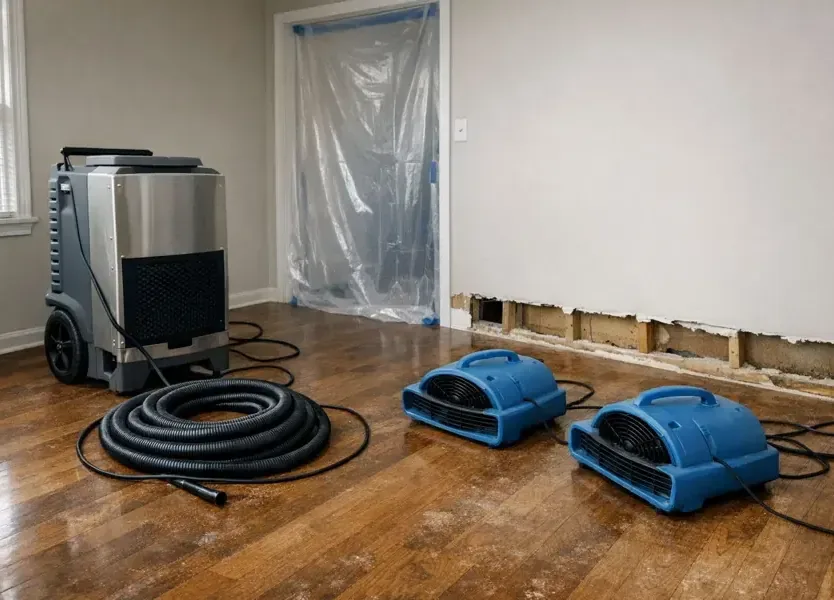
First steps for structural drying and dehumidification in Brockton
- 1
Keep the source status current
Report any renewed dripping or wetting during the drying phase. Additional entry changes the work and should be evaluated rather than treated as slow progress from the original release.
- 2
Leave equipment settings available
Equipment placement and operation should follow the drying plan. Report access concerns or unusual conditions so adjustments preserve the intended airflow and moisture removal path.
- 3
Identify needed room access
Mention scheduled use, shared entrances and fixed contents before equipment is arranged. A workable layout should preserve safe movement and allow the recorded material points to be checked again.
- 4
Delay covering wet assemblies
New trim, flooring and wall finishes should follow documented moisture checks. Premature closure can block airflow and hide a wet layer that still needs access.
How structural drying and dehumidification work is done in Brockton
The useful question after extraction is not how many fans occupy the room, but whether moisture is leaving the material that remains wet. At a Cary Hill property, the assessment should identify those materials and the locations used to track them. A wall face, subfloor edge and exposed framing member can have different drying needs. The setup must account for each assembly's access and condition instead of assigning the whole room a single assumption.
What does structural drying and dehumidification cost in Brockton, MA?
Structural drying costs in Brockton depend on affected materials, usable access and the monitoring needed to reach completion. Estimates should explain equipment and assessment work, along with any openings required to expose layers that cannot dry effectively while enclosed.
Small drying chamber
$1,000 to $2,000
Multiple material types
$2,000 to $5,000
Dense or extensive assembly
$5,000 to $9,000+
Ranges are typical, not a quote: category of water, square footage, material class and how fast drying started move the number most. Run the water damage cost calculator for a closer range.
The structural drying and dehumidification process in four steps
The drying plan follows the materials, water category and access conditions recorded during inspection. Technicians compare repeat measurements with an unaffected reference and adjust equipment when moisture stops falling.
Step 1 Establish the measurement map
The initial plan names the wet materials and comparison locations, recording enough detail for repeat observations to show progress rather than unrelated readings from different surfaces.
Step 2 Arrange a workable drying path
Equipment and selective access are planned around the retained assembly, with attention to airflow, moisture removal from the room and safe movement through the occupied property.
Step 3 Respond to material trends
Measurements distinguish improving areas from stalled ones, prompting assessment of access, placement or continuing wetting before the existing arrangement is extended without changes.
Step 4 Record the ending condition
Completion notes connect final observations with the original material map and distinguish finished drying from inaccessible areas or installation tasks that remain for the next trade.
Begin with the retained layers
In Montello, an interior can be mapped by affected surfaces and accessible comparison areas. The record should describe the material measured and its location so later readings remain meaningful. An intact finish may obstruct a wet layer beneath it; selective access can be necessary when equipment cannot otherwise act on that moisture.
- Separate visible surface dryness from concealed material condition.
- Identify layers hidden by cabinets or floor coverings.
- Record comparison readings on suitable unaffected material.
- Keep the source status visible during the drying phase.
Use the room conditions to support material recovery
Air movement encourages evaporation from accessible wet surfaces, while dehumidification removes moisture from the surrounding air. Equipment placement should serve those tasks without blocking exits or creating avoidable disruption. Occupants need clear instructions about the work area and any planned access for monitoring.
A Campello property may require different equipment positions as accessible surfaces change. If progress slows, the assessment should consider an enclosed layer, continuing entry or an ineffective airflow path. Simply extending operation without reviewing the measurements leaves the owner without an explanation of what is happening inside the assembly.
Make the completion decision traceable
Drying after interior water extraction should produce a record that connects the original wet area to its ending condition. Consistent measurement locations make that comparison possible. Removed materials and inaccessible areas should also appear in the handoff because they affect what the next trade can reasonably assess.
Finish installation may have material specific requirements beyond the drying scope. The owner should receive the final observations and remaining work description before new flooring or wall finishes close the assembly. That keeps equipment removal, completed material drying and the return of the room to normal use as clearly understood decisions.
Structural drying and dehumidification across Brockton and nearby towns
Material drying assessments serve Brockton properties in Cary Hill, Montello and Campello. Information about retained finishes, fixed contents and access restrictions helps determine where measurements and equipment can effectively reach the affected assembly.
The same service nearby: structural drying and dehumidification in Stoughton, Easton, Braintree.
Related water damage services in Brockton
Structural Drying and Dehumidification questions in Brockton, MA
Still dealing with it?
Clear floors can still conceal wet materials. A drying assessment should identify those layers and explain how their progress will be measured.
(888) 480-6221Discuss the material drying plan01Why measure more than the room's air?
Air conditions support drying, but retained materials can still hold moisture. Material readings help show whether the affected layers are improving and whether the equipment arrangement reaches the actual wet assembly.
02Does more airflow always solve slow progress?
Slow progress can involve trapped layers, continued entry or poor access. The recorded trend should prompt an assessment of the cause before equipment changes are selected for the affected material.
03Can equipment be moved to reduce inconvenience?
Access concerns should be discussed with the restoration team. Equipment placement serves a drying purpose, so adjustments need to preserve airflow and moisture removal while maintaining a practical route through the room.
04Why keep checking the same locations?
Consistent points allow meaningful comparison over time. The record should identify the material and location so an improving surface is not confused with a different area that was already relatively dry.
05Is a dry touch enough for new flooring?
Touch describes the accessible surface only. The underlying assembly needs appropriate assessment, and the installation trade should consider its material requirements before a replacement floor covers the retained layers.
06What should the final handoff include?
Useful documentation identifies checked materials, ending observations, removed layers and remaining limitations. It should distinguish completed drying from finish replacement and any separate work needed to correct the original source.
Make equipment decisions from recorded progress
Describe the affected surfaces, source status and available access to help establish a drying setup that reaches the retained assembly and supports a clear handoff.