Braintree Structural Drying and Dehumidification
The puddle can disappear while a subfloor or wall cavity stays wet. Braintree structural drying focuses on retained materials, using planned airflow, moisture removal and repeat observations to track the building's response.
(888) 480-6221Discuss retained material drying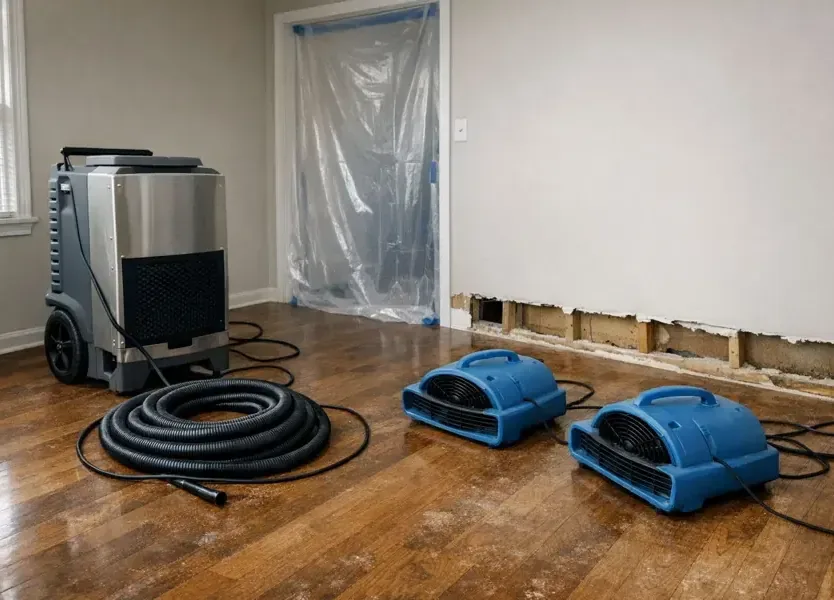
First steps for structural drying and dehumidification in Braintree
- 1
Keep the source status clear
Explain whether plumbing or exterior source work is complete and whether any new wetting has appeared. Continued entry can change the entire drying plan for retained materials.
- 2
Maintain the agreed work environment
Room access and equipment operation should follow the instructions provided for the setup. Unplanned changes can interrupt the conditions established to move moisture out of the assembly.
- 3
Leave observation points accessible
Stored items and furniture should not block marked wet areas. Repeat measurements need practical access to the same components throughout the planned drying work.
- 4
Report unexpected changes promptly
A new stain, renewed puddle or equipment interruption deserves reassessment. The work record should connect those observations with any adjustment to access, source investigation or equipment placement.
How structural drying and dehumidification work is done in Braintree
Drying is a material problem as well as a room condition. Warm air and a dry feeling surface do not describe moisture within a dense subfloor, a framing joint or the back of a wall. The plan should identify those retained components, establish useful observation points and explain how equipment will help moisture leave them. A written starting condition makes later changes easier for the owner to understand.
What does structural drying and dehumidification cost in Braintree, MA?
Structural drying costs in Braintree depend on retained material density, accessible surface area and the drying environment. Estimates should explain equipment, monitoring and any selective access needed, with changes tied to observed conditions rather than unexplained extensions.
Small drying chamber
$1,000 to $2,000
Multiple material types
$2,000 to $5,000
Dense or extensive assembly
$5,000 to $9,000+
Ranges are typical, not a quote: category of water, square footage, material class and how fast drying started move the number most. Run the water damage cost calculator for a closer range.
The structural drying and dehumidification process in four steps
The drying plan follows the materials, water category and access conditions recorded during inspection. Technicians compare repeat measurements with an unaffected reference and adjust equipment when moisture stops falling.
Step 1 Establish the material starting condition
The assessment identifies retained components and suitable comparison points, recording where moisture remains after extraction and any cleaning or removal work has been completed.
Step 2 Arrange a controlled drying setup
Equipment and access are selected around the wet assembly and room conditions, with clear operating instructions that keep household activity compatible with the treatment plan.
Step 3 Evaluate progress at consistent locations
Repeat observations show how each component responds, allowing slow areas to be investigated and the reason for equipment or access changes to be documented.
Step 4 Explain the end of active drying
Final records describe the material condition and outstanding building preparation, giving the owner useful information for coordinating replacement finishes after the drying equipment leaves.
Begin after water and contamination are addressed
The March 2, 2018 nor'easter affected Smith Beach and Watson Park, with floodwater reported on Edgehill Road. Storm affected materials can require cleaning and removal decisions before drying proceeds. A supply leak may leave a different preparation task. In either case, the assembly selected to remain should be accessible and appropriate for treatment before airflow becomes the focus of the job.
- Identify liquid water that still needs extraction.
- Separate contaminated layers from components suitable for retention.
- Record the location of each persistent wet area.
- Check whether insulation or finishes obstruct effective access.
Match equipment to the assembly and room
Air movers help moisture leave exposed surfaces, while dehumidification removes water vapor from the controlled environment. Their arrangement should reflect wet material locations, room connections and available safe power. An open doorway or changing household use can affect the intended drying environment, so the owner needs practical instructions about access and equipment operation.
Water removal and selective opening can reduce the load left for drying. The scope should explain those supporting tasks rather than treating additional equipment as the answer to every slow responding surface.
Read the trend and respond to the cause
Repeat measurements need consistent locations and material context. A stubborn wet point may indicate concealed water, blocked access or an unresolved source. The response should investigate that cause and explain any revised approach. Records should show what changed and why, including equipment repositioning or additional inspection of a hidden layer.
- Compare retained components with suitable dry reference conditions.
- Record readings alongside the material and room location.
- Explain persistent wetting before extending the treatment plan.
- Provide final observations for later finish installation decisions.
A completed drying phase should have a clear material based explanation. The owner needs to know which areas were assessed, how retained components responded and what separate building tasks remain before the rooms are fully restored.
Structural drying and dehumidification across Braintree and nearby towns
Braintree structural drying assessments consider the wet materials, source status and current room conditions. A clear description of completed extraction or cleaning helps establish the remaining work before equipment and monitoring are arranged.
The same service nearby: structural drying and dehumidification in Stoughton, Brockton, Westwood.
Related water damage services in Braintree
Structural Drying and Dehumidification questions in Braintree, MA
Still dealing with it?
Describe which materials remain wet after water removal and whether equipment is already operating so the next assessment can focus on progress.
(888) 480-6221Discuss the drying observations01Does a dry room surface mean the structure is dry?
Concealed or dense materials can retain moisture after exposed surfaces improve. Their condition needs appropriate measurements and inspection rather than a conclusion based only on touch or appearance.
02What does a dehumidifier contribute to the setup?
It removes water vapor from the air in the drying environment. Its role complements airflow across accessible wet surfaces and the access needed for moisture to leave retained materials.
03Why might equipment positions change during the job?
Progress observations can reveal areas responding differently. Repositioning should follow those findings, with an explanation of the wet component being addressed and any access limitation discovered during monitoring.
04Should windows be opened while equipment operates?
Follow the operating instructions for the specific setup. A controlled drying environment depends on room conditions, and changing openings can interfere with the plan established for the affected assembly.
05Can an unresolved leak prevent drying progress?
Continued moisture entry can keep a material wet despite equipment operation. New stains or persistent readings should prompt investigation of source status and concealed water before the plan is extended.
06What documentation helps the flooring installer?
The retained material observations, moisture records and any outstanding preparation notes provide useful context. The installer can then address its own requirements before new flooring covers the treated assembly.
Give every retained wet component a measured endpoint
A material based plan connects access, airflow and dehumidification with repeat checks, making the reason for continued work or completion clear to the property owner.