Easton Structural Drying and Dehumidification
Once the puddle is gone, the building can still hold absorbed water. Structural drying follows the remaining moisture in framing, flooring and wall layers, adjusting conditions until those retained materials reach suitable drying goals.
(888) 480-6221Assess the remaining material moisture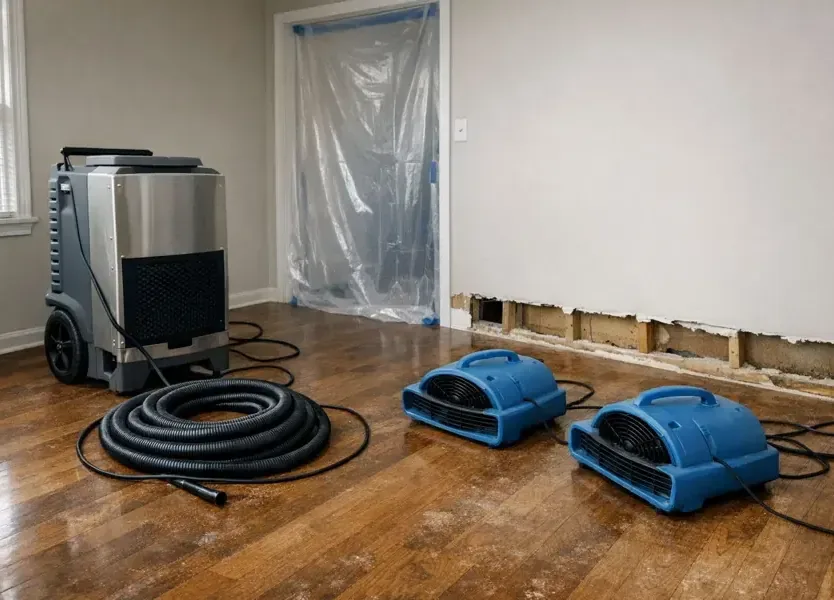
First steps for structural drying and dehumidification in Easton
- 1
Confirm the source is controlled
Report any continuing pipe leakage or outside entry before drying is arranged. New water changes the material condition and can prevent the setup from making useful progress.
- 2
Describe the retained wet surfaces
Identify flooring, wall bottoms and accessible framing that remained after extraction. Material details help establish the measuring locations and the access needed for a practical drying plan.
- 3
Keep equipment settings coordinated
Do not move or disconnect drying units without discussing the change. Their placement works with room conditions, and an unplanned adjustment can leave a wet surface untreated.
- 4
Retain the progress records
Ask for findings tied to identifiable locations rather than a general statement that the room looks dry. Those records help explain adjustments and the eventual closing decision.
How structural drying and dehumidification work is done in Easton
A room can feel comfortable while its wall base or subfloor remains damp. Structural drying in Easton focuses on that gap between room appearance and material condition. The assessment establishes where moisture remains after extraction, then determines how it can leave the assembly. The drying plan connects equipment operation with recorded changes in the wet assembly. Readings tied to specific locations show whether the retained building materials are responding.
What does structural drying and dehumidification cost in Easton, MA?
Structural drying costs in Easton depend on retained materials, access and the equipment arrangement they require. Dense layers, enclosed cavities and several affected rooms can demand different treatment from an exposed, localized wet surface.
Small drying chamber
$1,000 to $2,000
Multiple material types
$2,000 to $5,000
Dense or extensive assembly
$5,000 to $9,000+
Ranges are typical, not a quote: category of water, square footage, material class and how fast drying started move the number most. Run the water damage cost calculator for a closer range.
The structural drying and dehumidification process in four steps
The drying plan follows the materials, water category and access conditions recorded during inspection. Technicians compare repeat measurements with an unaffected reference and adjust equipment when moisture stops falling.
Step 1 Establish material readings and dry references
A map of wet surfaces and dry comparison areas establishes the baseline for interpreting subsequent changes in each material.
Step 2 Arrange access and room conditions
Openings and equipment positions are selected to give retained wet layers a drying path, with airflow and moisture removal working together inside the treatment area.
Step 3 Assess the response and adjust treatment
Repeated readings show which materials are improving and which need a changed approach, allowing equipment placement or access decisions to follow actual progress in the assembly.
Step 4 Document the closing material condition
Final findings explain the basis for ending drying and identify any remaining finish work before opened walls or exposed floor layers are covered again.
Give each material a useful drying path
Framing, floor coverings and enclosed wall layers release moisture differently. A surface trapped behind an impermeable covering may need access before airflow can help. The plan should identify those barriers and explain any selective opening. Treating every wet material as though it were an exposed wall face can leave concealed sections outside the effective drying area.
- Floor transitions can hold moisture below an intact covering.
- Wall bottoms deserve checks after water collected against trim.
- Enclosed cavities need a route for moisture to escape.
- Dry reference areas help interpret readings from affected materials.
Connect room conditions with material response
For properties in Easton Center, Furnace Village or Five Corners, the drying setup follows the actual affected room arrangement. Air movers support evaporation at wet surfaces while dehumidification removes moisture from the surrounding air. Open windows, moved equipment or disconnected units can change that controlled environment, so adjustments should follow the drying assessment rather than household preference alone.
When liquid remains accessible, water extraction reduces the load before the longer material drying stage. Removing that water first allows equipment to focus on moisture already absorbed by the building.
Finish according to measured condition
Drying should not end simply because equipment has operated for an assumed period. Progress records compare the same materials and locations across visits, identifying stalled areas that need a different approach. The final assessment explains the closing readings and any remaining finish work. That gives the owner a clear basis for covering an opened wall or preparing a floor for replacement material without hiding moisture that still needs attention.
Structural drying and dehumidification across Easton and nearby towns
Structural drying assessment serves Easton properties with wet retained materials, including rooms around Furnace Village and Five Corners. The assembly type, source status and available access establish the work needed after visible water removal.
The same service nearby: structural drying and dehumidification in Stoughton, Mansfield, Brockton.
Related water damage services in Easton
Structural Drying and Dehumidification questions in Easton, MA
Still dealing with it?
Describe which materials remain wet after extraction so the drying assessment can focus on the layers that still hold moisture.
(888) 480-6221Discuss the retained wet materials01Does a dry room feel mean dry framing?
Room comfort and material moisture are different observations. Measurements at the affected framing and other retained layers establish whether the assembly still needs controlled drying.
02Why use a dehumidifier with air movers?
Air movement helps moisture leave wet surfaces, while dehumidification removes moisture from the air. The coordinated setup supports continued drying instead of merely circulating damp air.
03Can equipment run for a fixed duration?
The material response should determine completion. Readings reveal whether a section has reached suitable conditions or needs changes in access, airflow or the surrounding drying environment.
04Should windows stay open during treatment?
Room conditions are part of the equipment plan. Changes should be discussed with the restoration team because outside air can alter the controlled environment around wet materials.
05Why might a covering need to be opened?
A finish can prevent moisture from leaving the layer beneath it. Selective access may be needed to establish a workable drying path for the retained assembly.
06What supports the decision to stop drying?
Closing material readings, suitable comparisons and source status should support the decision. The record should also identify any replacement finishes or other follow-up work still required.
Use readings to shape the next step
Request a drying assessment that connects equipment placement, access and progress measurements to the actual wall, floor or framing assembly involved.