Mansfield Burst Pipe Water Damage
A burst pipe can send water through several connected spaces before the supply is stopped. Cleanup in Mansfield establishes the release path, protects safe access and separates urgent water recovery from the remaining drying work.
(888) 480-6221Report the burst pipe damage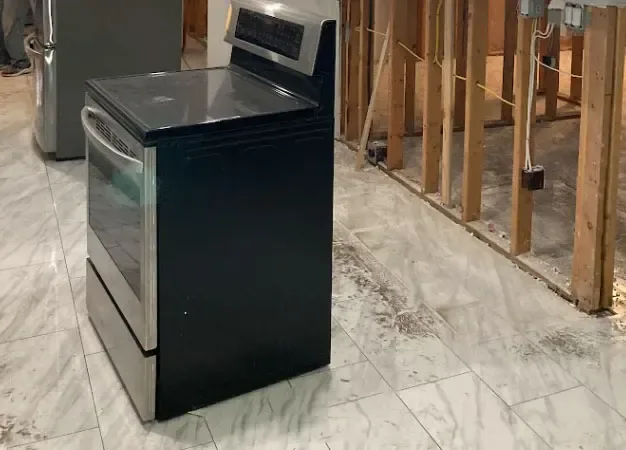
First steps for burst pipe water damage in Mansfield
- 1
Isolate water safely
A reachable shutoff may limit the release when the approach is dry and safe. Avoid crossing flooded areas or handling wet electrical equipment to reach controls inside the room.
- 2
Describe connected damage
List rooms where water has appeared, including any level below the break. This helps inspection follow the release beyond the first pool and into adjacent assemblies needing moisture checks.
- 3
Protect dry surroundings
Keep household traffic outside the affected area. Moving wet items across dry flooring can expand handling needs and obscure where the original release reached before cleanup began.
- 4
Retain the source record
Save information about the broken pipe and the work that stopped it. Cleanup decisions need a clear source status alongside the separate assessment of wet building materials.
How burst pipe water damage work is done in Mansfield
The room containing a broken pipe may be only the starting point of the cleanup. Water can pass through a doorway, collect under a cabinet or descend into a ceiling below. At an affected property in Purdy Corner, the first useful map follows that movement rather than treating each room as a separate event. The source must be controlled, but the materials already wetted need their own assessment after the flow stops.
What does burst pipe water damage cost in Mansfield, MA?
Burst pipe cleanup costs in Mansfield change with the number of wet rooms, downward spread and access to concealed materials. The estimate should connect extraction, removal and drying tasks to the actual path of the indoor release.
Contained room release
$1,500 to $3,000
Several wet rooms
$3,000 to $7,500
Multiple-level spread
$7,500 to $12,000+
Ranges are typical, not a quote: category of water, square footage, material class and how fast drying started move the number most. Run the water damage cost calculator for a closer range.
The burst pipe water damage process in four steps
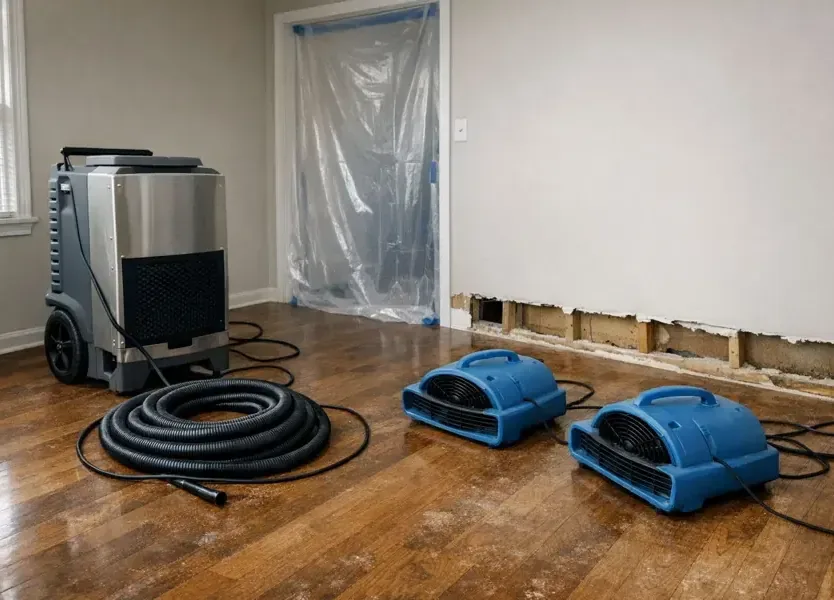
The drying plan follows the materials, water category and access conditions recorded during inspection. Technicians compare repeat measurements with an unaffected reference and adjust equipment when moisture stops falling.
Step 1 Establish the release history
The assessment identifies the source location, control status and reported spread so the initial inspection follows the water through the affected building.
Step 2 Recover water along its path
Extraction addresses accessible pools and saturated surfaces, while checks at thresholds and wall bases identify where additional access may be required for drying.
Step 3 Treat connected wet materials
The drying plan links rooms and assemblies affected by the release, placing equipment where retained moisture can be reached and recording any removal decisions.
Step 4 Confirm remaining work clearly
Final notes distinguish source completion, dried materials and outstanding finishes so the owner can understand the condition of each affected room after cleanup ends.
Distinguish the building loss from public supply work
The Mansfield Water Operations Division maintains the public drinking water system and performs leak detection. An indoor burst requires attention to the damaged pipe and the building around it. The cleanup record should state where the release occurred and whether source correction is complete, keeping those details connected to the rooms that require water removal.
- Identify the last area reached before the flow stopped.
- Report wet ceilings or lower rooms beneath the source.
- Keep people away from water near electrical equipment.
- Preserve photographs of the initial spread when safely possible.
Inspect connections between the wet rooms
A threshold can look clear after extraction while the floor beneath it remains damp. Wall bases and cabinet voids may also hold water outside the most visible pool. The scope should include checks at those connections so removal and equipment placement address the whole affected assembly, including areas accessible only after selected finish materials have been lifted.
In Robinsonville and Whiteville, service requests should describe whether the loss involves a single room or connected levels. That information helps the inspection begin at the source and reach the spaces where water may have collected out of sight.
Make the post-release condition measurable
Once water extraction has reduced the accessible water, readings establish the remaining wet boundary. Drying equipment is then positioned for the retained materials. A useful record shows how that boundary changes, why particular finishes were removed and what remains to be addressed before occupied rooms return to ordinary use.
- Track material readings at the source and along the spread.
- Keep removed finish decisions separate from pipe correction charges.
- Report new pooling while equipment operates in the affected space.
- Assess remaining wet areas before any wall cavity is closed.
Burst pipe water damage across Mansfield and nearby towns
Burst pipe damage service reaches Purdy Corner, Robinsonville and Whiteville. Inspection planning accounts for the source location, connected wet rooms and any downward spread that needs assessment before extraction and drying can be completed.
The same service nearby: burst pipe water damage in Stoughton, Easton, Brockton.
Related water damage services in Mansfield
Burst Pipe Water Damage questions in Mansfield, MA
Still dealing with it?
The location of the break and the rooms reached by water help define the first assessment after a sudden release.
(888) 480-6221Describe the release path01Why inspect rooms away from the broken pipe?
Water can cross thresholds and follow concealed spaces before collecting. Checking adjacent rooms establishes the full wet boundary instead of assuming the pipe's location contains all of the affected material.
02Can cleanup proceed after the supply stops?
Yes, once access and hazards are assessed. Stopping the source limits new water, while extraction and material checks address the moisture that entered before the release was controlled.
03Should the ceiling below be included?
A ceiling beneath the release needs assessment if water reached it or the surrounding cavity. Wet overhead materials also raise access concerns that should be resolved before the room is occupied.
04Will a public utility handle indoor drying?
Public system maintenance and building cleanup are different responsibilities. The damaged indoor materials need their own assessment, with source work documented so the drying scope has a clear starting point.
05What if a room looks dry after extraction?
Concealed layers can remain damp after visible water is removed. Readings at flooring edges, wall bases and affected cavities determine which materials still need access and monitored drying.
06How are additional wet areas handled?
New findings should be photographed and explained in a scope update. The record needs to connect added extraction, removal or drying with the surfaces actually affected by the release.
Get the connected wet rooms assessed
Share the source status and visible spread so the cleanup scope can address standing water, concealed moisture and the materials requiring further access.