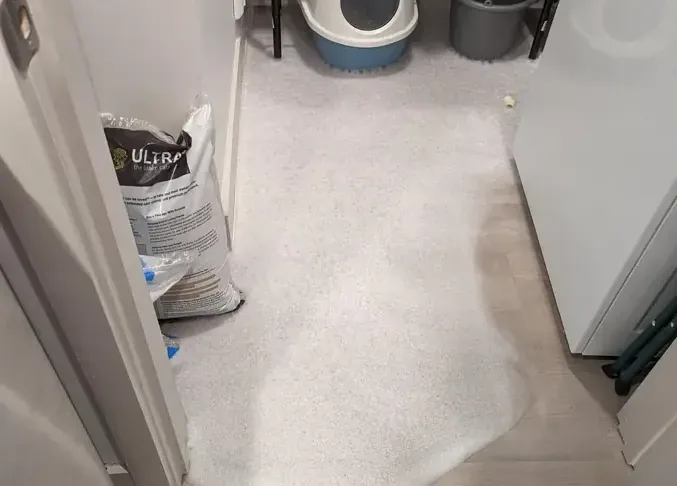
The Dedham-Westwood Water District lists dishwasher and washing machine connection puddles among appliance leak warning signs. Its checklist also includes refrigerator ice and water dispensers. In a Westwood home, those observations offer a useful starting point when water appears beside an appliance and disappears beneath a cabinet or floor edge.
Key takeaways
- The owner can record which appliance was operating when water appeared.
- The utility checklist identifies supply connection drips and puddles as signs needing attention.
- Wet electrical equipment and heavy appliances require a safe access plan.
- Inspection should follow water beneath cabinet bases and adjoining floor finishes.
- Source service and the treatment of affected materials need separate completion notes.
An appliance cycle can explain when the puddle appears
A puddle discovered after laundry deserves a different incident description from water that appears beneath a refrigerator while the room is unused. The owner can note the appliance activity, where the water first became visible and whether the wet area continues growing.
A photograph of the surrounding floor is useful even when the actual connection remains hidden behind the machine.
The district's checklist names dishwasher and washing machine connections, refrigerator dispensers and other household leak locations. For appliance water damage cleanup, the initial account should identify the particular appliance and the wet surfaces around it.
The technician can then coordinate source inspection and interior access around the observed problem instead of moving equipment without a clear purpose.
- The owner records whether a cycle was running or had already finished.
- A floor photograph shows the puddle relative to cabinets and doorways.
- The incident note identifies any new noise, visible drip or changed display observed safely.
The connection needs attention without unsafe movement
A heavy appliance should stay in place until the person servicing it has considered water, electrical connections and the route for movement. An occupant should avoid reaching through standing water for a plug or trying to pull a machine across wet flooring.
The access problem can be described to the appliance technician or plumber so source work begins with an appropriate arrangement.
The water district directs customers with an emergency indoor leak to the inside shutoff near the meter. It also says a failed inside valve requires contacting the district for curb box shutoff.
If the owner can approach the inside valve safely, its status belongs in the incident record, along with any isolation performed at the appliance and the instructions provided by the responding trade.
- The supply status is written down for the appliance service visit.
- The contractor receives a description of electrical equipment near the puddle.
- Movement waits until the appliance connections and working space have been assessed.
Cabinet bases can hide the widest part of the wet area
Water beside a dishwasher may continue behind the toe kick or beneath the finish flooring. The inspection follows that visible route and examines accessible cabinet edges, wall bases and the next room when the water path reaches a threshold.
A room diagram helps the owner understand why the affected area can be wider than the exposed puddle beside the appliance.
Access to concealed surfaces should have a stated purpose. The contractor can explain whether an opening is intended to inspect the cabinet base, reach wet material or support drying of a retained assembly.
Photographs before and after access work show the original finish condition and the newly visible area, creating a practical record for later cabinet or flooring decisions.
The owner can identify drawers or cabinets containing items needed during the work, allowing their removal to be planned before access becomes restricted. A photograph of the cleared interior also records the condition of the shelf and cabinet floor.
Those surfaces remain part of the inspection when water has traveled through the same enclosed space.
Cleanup should account for the water's actual route
The appliance involved and the point of release matter when the contractor assesses the water condition. A supply connection, appliance interior and drain route are different places to examine during source service.
The cleanup scope should identify which release was found and the surfaces it reached so the material handling decision is understandable to the homeowner.
Water extraction addresses accessible liquid after the source and safe working conditions are settled. A wet floor covering or cabinet edge may require additional access to assess what remains beneath it.
The owner can keep notes on any moved appliance, removed trim and protected contents, with the location of each item preserved for the next contractor visit.
- The source description names the connection or component examined.
- The removal record identifies flooring and cabinet surfaces by location.
- Contents under nearby sinks are photographed before the cabinet is cleared.
The drying arrangement should fit the kitchen or laundry room
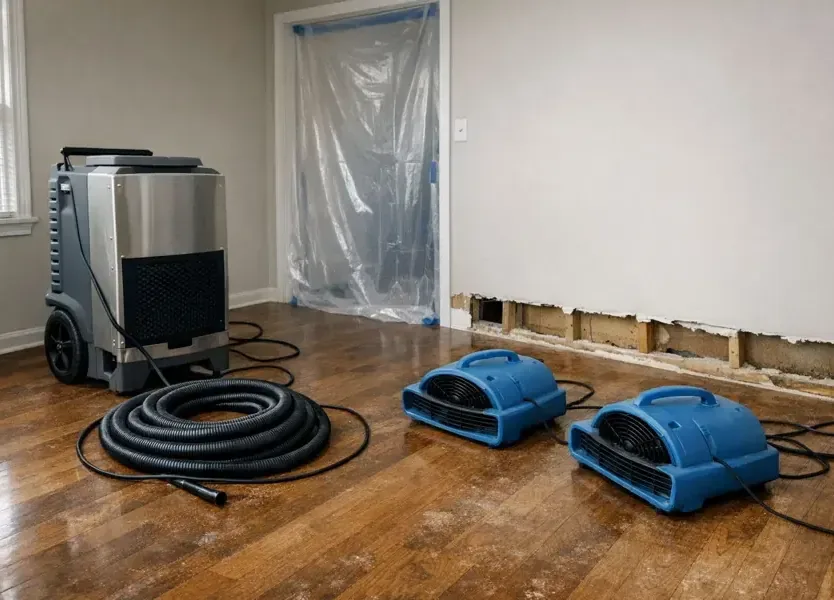
An occupied kitchen needs a workable path around equipment and restricted areas. The contractor should explain which cabinets must stay accessible, which openings support drying and how household movement can continue safely.
In a laundry room, the same discussion includes the appliance position and any service visit needed before normal use returns.
Structural drying checks follow retained materials at repeatable positions, including concealed edges that the inspection made accessible. The owner can ask the contractor to identify those positions on a photograph.
A marked cabinet side, floor section or wall base is easier to track than a general statement that the kitchen is improving.
The service test and the material record belong together
The appliance service handoff should describe the source work completed and the conditions for returning the appliance to use. The restoration file should describe the affected assembly and the material readings.
Keeping these accounts together lets the property owner see both the current source condition and the state of the floor and cabinet that became wet.
The district also lists puddling beneath a sink cabinet and dripping after shower use among household leak warnings. An owner who notices a separate wet area can record it as another observation with its own location and timing.
That keeps the appliance incident understandable while ensuring a different fixture receives the specific attention needed to trace its water route.
Questions
What helps distinguish an intermittent appliance leak?
The timing of the puddle in relation to appliance activity is useful. A note showing whether water appeared during a cycle, after use or while the appliance was idle gives the service technician a clearer starting point for inspection.
Why might a cabinet opening be needed?
The visible floor can conceal wet material behind a toe kick or at the base of the cabinet. A targeted opening allows the contractor to inspect that location, document its condition and determine what access is needed for the retained assembly.
What should the owner ask before equipment enters the kitchen?
The contractor should explain the safe walking route, the cabinet areas that must remain open and any appliance restrictions. Household use and the source service appointment can then be organized around the actual work area.
What belongs in the appliance leak completion file?
The file should combine the service description with photographs of the exposed surfaces and material measurements. Any cabinet, flooring or appliance task that remains open needs its own location and next contact so the homeowner can arrange the followup work.