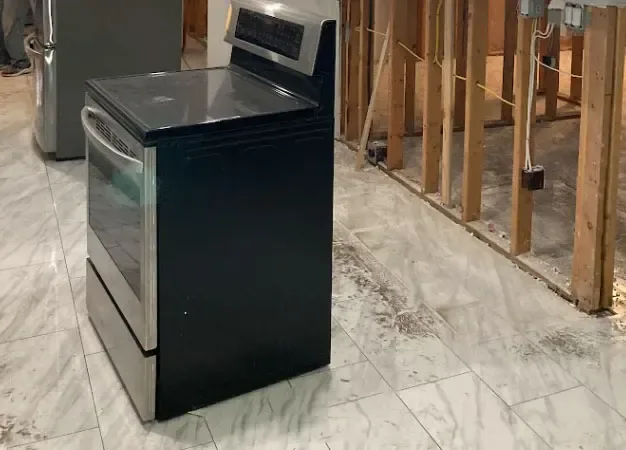
Water spreading through a Stoughton house needs an immediate source check, even when a public main break has been reported nearby. The owner can record where water first appeared and whether it is still moving while staying outside unsafe rooms. That account helps the utility, plumber and restoration contractor understand the separate work needed at the property.
Key takeaways
- The town Water Department handles main breaks, curb box shutoffs and water leaks.
- A room record should describe the actual entry point and affected finishes.
- Safe shutoff access comes before attempts to move wet belongings.
- The plumbing handoff should identify what stopped the release and what remains isolated.
- Extraction and material measurements continue after the immediate source is controlled.
What the Pleasant Street break adds to the conversation
A major water main break closed Pleasant Street between Lincoln Street and Union Street on June 26, 2023. Access from Prospect Street, Chestnut Street and Grove Street was also affected.
The useful lesson for an owner arranging help is to describe both the building problem and any access restrictions that could affect arrival at the property.
The town Water Department supplies residents with water supplemented by an MWRA connection and handles water leaks and curb box shutoffs. A person reporting water indoors should identify the room, the visible water route and whether a plumbing fixture is involved.
A separate report of water in the street belongs in the same incident notes, with the time it was observed and the source of any public notice.
- The owner records the road restriction mentioned in an official notice.
- The indoor account identifies a ceiling drip, wall opening or floor puddle.
- The contractor receives an access description that avoids the affected road when necessary.
A useful description starts at the wet edge
A puddle beneath a sink tells a different story from water crossing a doorway. The initial walkthrough traces visible tracks toward the source and away into adjoining finishes, without pulling apart fittings or entering water near electrical equipment.
Photographs taken from a safe position can preserve the original shape of the puddle before towels, footsteps or furniture movement change it.
The burst pipe cleanup process begins with a clear account of the release. A description such as water descending behind the kitchen cabinet is useful because it points the inspection toward a concealed route.
An owner can also note whether a faucet was running, an appliance was operating or the room had been unused when the water was discovered.
- A wide photograph shows the room and nearby doorway.
- A closer photograph records the wet baseboard or damaged fitting.
- A written note distinguishes an observed stream from an old stain.
The shutoff handoff needs a definite outcome
Indoor isolation should be handled from a dry, safe position. If the valve cannot be reached safely or its function is unclear, the owner can describe the access problem to the appropriate trade instead of entering the wet area.
The Water Department handles curb box shutoffs; an indoor plumbing problem may also need a plumber to locate the damaged component and verify that the release has stopped.
The restoration contractor needs the result of that source work in plain language. Useful details include which supply remains off, which rooms lost water service and whether another visit is required before operation resumes.
A photograph of a visibly damaged component can accompany the notes, while any plumber instructions remain attached to the same record for the person managing the property.
Removal follows the routes beneath the visible puddle
Once access and source control are settled, water extraction addresses liquid on the floor and within accessible wet flooring. The technician examines transitions where different surfaces meet because a kitchen release can continue beneath a threshold.
Cabinet bases, wall edges and the room below also deserve attention when the visible path leads toward them.
Furniture placement affects this inspection. A large cabinet can hide the end of a wet area, while stored boxes may absorb water and obscure the floor beneath them.
The owner and contractor can record items before movement, agree on a dry holding area and keep the route open for equipment. The resulting room map should show both the original puddle and any additional wet material located during extraction.
- The technician labels concealed edges that require another inspection.
- Movable contents receive a location note before relocation.
- Changes to the affected boundary are added to the room diagram.
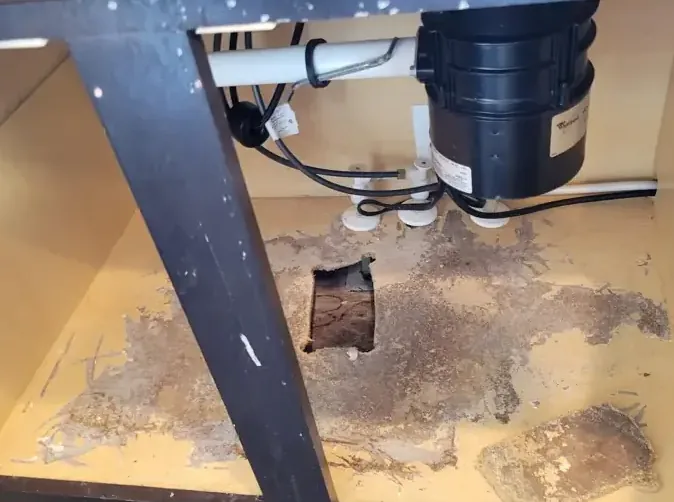
Drying records connect the first visit to the last
The absence of standing water changes the job, but the retained floor and wall materials still need measurement. A structural drying assessment compares affected materials with suitable dry references and returns to the same labeled locations.
That record helps explain why equipment remains in a room after its surface looks ordinary again.
The owner benefits from a short explanation of equipment placement and the areas that must stay accessible. A doorway left open for the drying arrangement, a cabinet opening or a protected cable route should have a stated purpose.
Any new drip, growing stain or unexpected equipment stoppage belongs in the update to the contractor so the next inspection can address the change directly.
Keep utility work and interior recovery in the same file
The town lists spring and summer 2024 main replacement on Charles Circle, Donald Road, Greenwood Avenue, Leach Street, Walnut Court and School Street. For a current loss, an owner can retain the specific utility notice alongside the indoor photographs and contractor records.
The dates and descriptions should make it easy to follow what happened at the building and what work occurred on the public system.
A useful closing file includes the source repair description, extraction scope, retained material readings and any areas awaiting separate work. The owner can request clarification when a room shown wet in the opening photographs disappears from the final account.
A complete handoff allows the next trade to understand which surfaces were opened, which materials stayed in place and what conditions were measured before equipment removal.
Questions
Which details help when reporting water in the house?
The most useful report names the room, the surface where water first appeared and whether the flow continues. Access hazards and the status of the indoor supply should follow, so the recipient can understand the immediate conditions before discussing the wider street event.
Can a public main notice go in the cleanup file?
Yes. The notice can be saved with its publication date and the observations from the property. Keeping the original message together with photographs preserves the sequence for later conversations with the utility, plumber or restoration contractor.
What happens when the supply has already been turned off?
The contractor records that condition, checks whether water is still entering and evaluates the affected finishes. The inspection can then focus on the spread through the room and the liquid that remains beneath or within accessible materials.
What should an owner receive when drying finishes?
A clear completion account identifies the measured locations, retained materials and unresolved source or finish work. It should also explain any inaccessible area that requires another trade, with photographs that make the location easy to recognize.